If you are shopping for a home EV charger, chances are you have come across two power ratings cropping up again and again: 7kW and 22kW. The numbers sound straightforward, but the reality involves your home's electricity supply, your car's onboard charger, and the practical difference in charge times — all of which need to line up before a 22kW unit makes any sense at all.
This guide cuts through the noise. We will explain exactly what each rating means, who can actually use a 22kW charger at home, and how to find out which option applies to your property. At Power Team Electrics, we install EV chargers across Surrey, Kent, Essex, Hertfordshire, Berkshire, Buckinghamshire, and Sussex — and this is one of the questions we answer most often.
What Does the Power Rating Actually Mean?
An EV charger's power rating describes how fast it can deliver energy to your car. In practice, two factors put a ceiling on real-world speed: your home's electricity supply and your car's onboard AC charger.
Single-Phase vs Three-Phase Supply
This is the most important thing to understand before you even look at charger models.
- 7kW chargers run on a single-phase 32A supply — the standard domestic electricity supply found in the vast majority of UK homes.
- 22kW chargers run on a three-phase 32A supply — a higher-capacity supply typically found in commercial premises, industrial units, and some larger rural properties.
Most UK homes only have a single-phase supply. If your property does not have a three-phase supply, a 22kW charger simply cannot operate at its rated output — and in most cases cannot be installed at all at that power level.
This single fact rules out 22kW for the overwhelming majority of residential customers in the UK.
How Do You Know if You Have a Three-Phase Supply?
1. Look at your meter and fuse head.
A single-phase supply will have one live cable entering the meter. A three-phase supply will have three live cables — this will be clearly visible at the incoming service head. Three-phase meters are also physically larger and typically carry a 100A fuse rather than the 60A or 80A fuse common in single-phase installations.
2. Ask your Distribution Network Operator (DNO).
Your DNO can confirm your supply type. Common DNOs in the South East and Home Counties include UK Power Networks (covering Surrey, Kent, Essex, Hertfordshire, and Sussex) and Scottish and Southern Electricity Networks (covering Berkshire and parts of Buckinghamshire).
If you are unsure, Power Team Electrics can assess your supply as part of an installation survey.
The Onboard Charger Limit: Why Your Car Matters
Even if your property does have a three-phase supply, you need to check your car's onboard AC charger. This onboard charger has a maximum AC input rating and acts as a hard ceiling on your actual charge rate regardless of how powerful your home unit is.
| Vehicle | Onboard AC Charger Limit |
|---|---|
| Tesla Model 3 (Standard Range) | 7.4kW |
| Tesla Model 3 (Long Range / Performance) | 11kW |
| Tesla Model Y (Standard Range) | 7.4kW |
| Tesla Model Y (Long Range) | 11kW |
| Volkswagen ID.4 | 11kW |
| Renault Zoe | 22kW |
| Kia EV6 | 11kW |
| Hyundai IONIQ 5 | 11kW |
| Nissan Leaf (older model) | 3.6kW |
| BMW iX3 | 11kW |
Most mainstream EVs are limited to 7.4kW or 11kW on AC. Only a handful of models — most notably the Renault Zoe — actually support the full 22kW. If your car tops out at 7.4kW, installing a 22kW charger delivers no additional speed whatsoever.
Charging Speed Comparison: Real-World Times
| Charger Power | Supply Required | Approx. Charge Time (60kWh battery) |
|---|---|---|
| 3.6kW (standard 3-pin) | Single-phase | 16–17 hours |
| 7kW / 7.4kW | Single-phase | 8–9 hours |
| 11kW | Three-phase | 5–6 hours |
| 22kW | Three-phase | 3–4 hours |
For the majority of EV drivers — who charge overnight — a 7kW charger is more than adequate. The step from 7kW to 22kW saves roughly four to five hours on a full charge, a benefit that only becomes meaningful if you need to rapid-turnaround charges during the day.
Cost Difference Between 7kW and 22kW Installation
7kW installation is a straightforward job for a certified electrician. It uses your existing single-phase supply and typically requires a dedicated 32A circuit from your consumer unit to the charger location. Most domestic 7kW installations are completed in half a day.
22kW installation requires a three-phase supply to already be present, or the cost and disruption of a DNO upgrade to bring one in. DNO supply upgrades can take weeks or months to arrange, involve significant civil works at the street, and can cost several thousand pounds in addition to the charger and installation itself.
Who Actually Needs a 22kW Home Charger?
You are a strong candidate for 22kW if:
- Your property already has a three-phase supply — typically a large detached house, a converted commercial property, or a rural property with a three-phase agricultural supply.
- Your EV supports 22kW AC charging — currently primarily the Renault Zoe and a small number of other European models.
- You run multiple EVs from the same location — three-phase supplies distribute load across phases.
- You operate a small business from your home — if vehicles need to be topped up for multiple daily runs.
- You are a fleet operator or business premises — commercial and fleet applications are the primary home for 22kW charger technology.
For the vast majority of homeowners and landlords, a quality 7kW charger is the right answer.
What Power Team Electrics Supplies and Installs
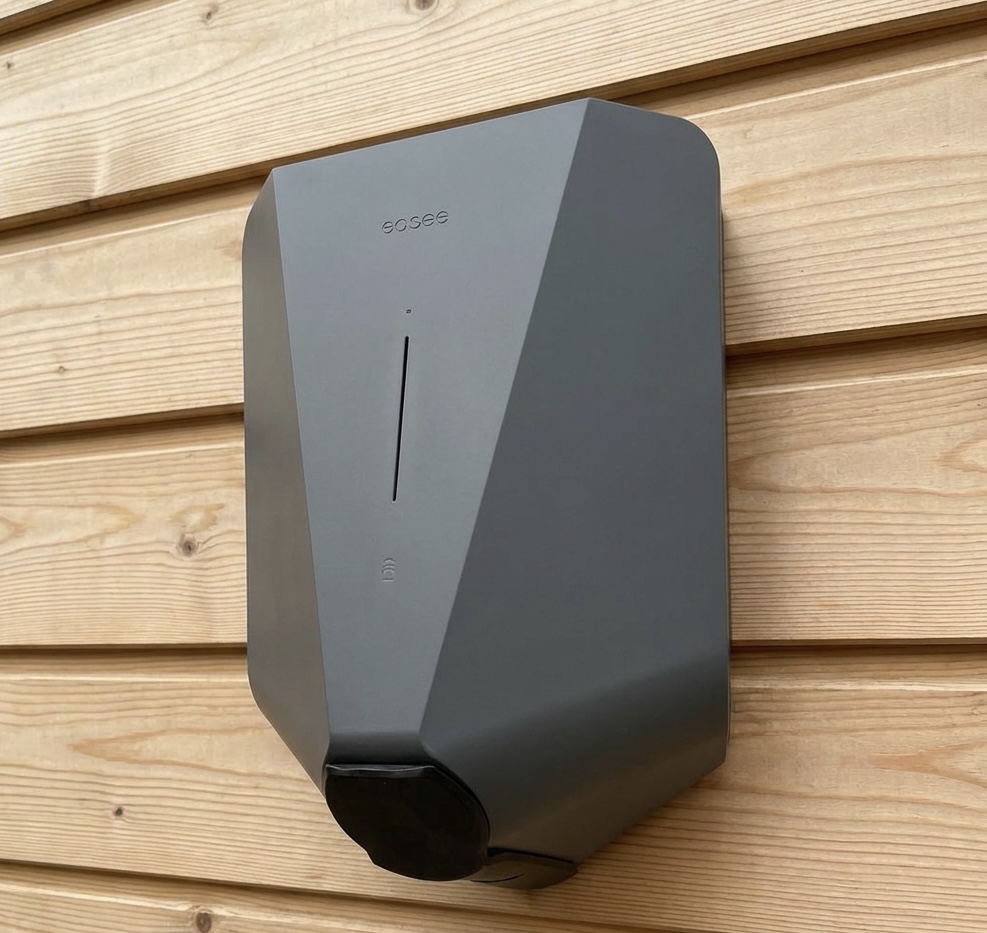
At Power Team Electrics, we supply and install 7kW units as our standard residential offering. For customers who have confirmed three-phase supply and a compatible vehicle, we assess 22kW and three-phase installations on a case-by-case basis. Charger models we work with that support three-phase operation include:
- BG Sync — smart three-phase charger with app integration and load management
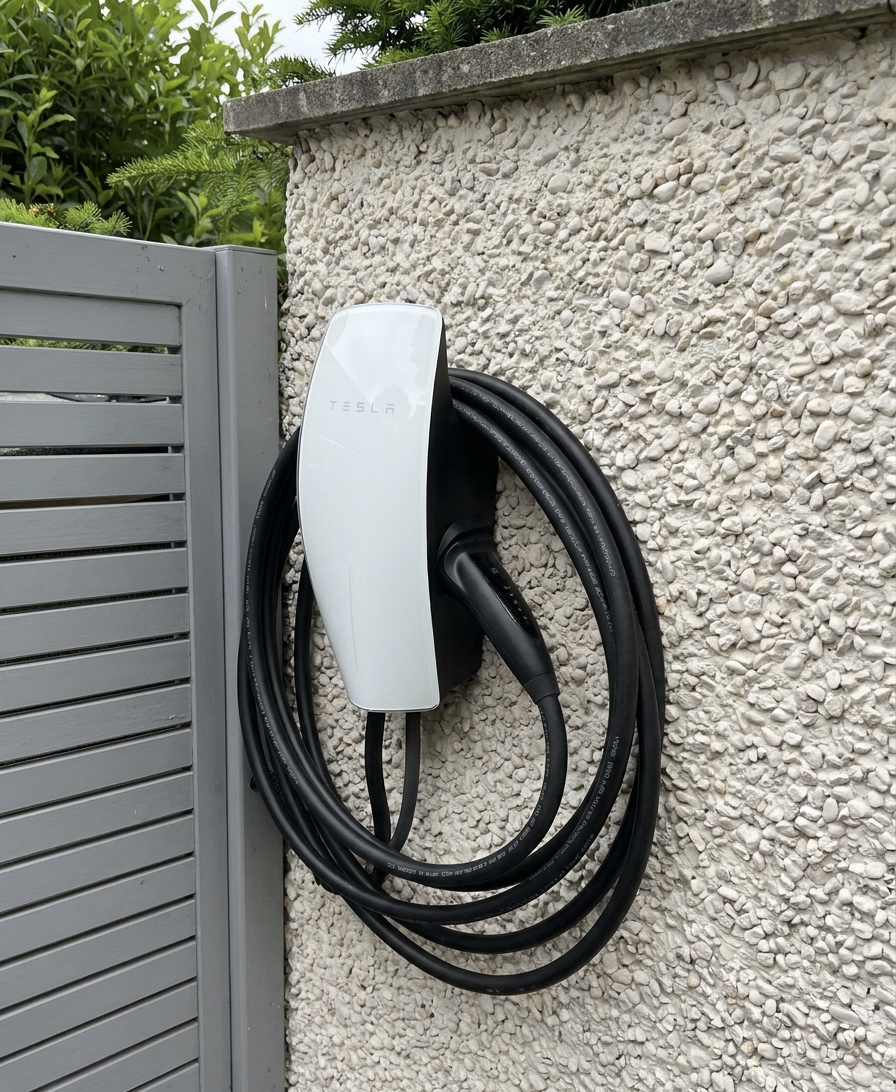
- Tesla Wall Connector — supports up to 22kW three-phase where the vehicle and supply allow
- Rolec Evo — robust and versatile unit with three-phase capability
- EasyOne — straightforward three-phase unit well-suited to both residential and light commercial settings
We cover Surrey (Guildford), Kent (Maidstone), Essex (Chelmsford), Hertfordshire (St Albans), Berkshire (Reading), Buckinghamshire (Milton Keynes), and Sussex (Brighton).
Summary: 7kW vs 22kW — Which Do You Need?
| Factor | 7kW | 22kW |
|---|---|---|
| Supply type required | Single-phase (standard UK domestic) | Three-phase (uncommon in UK homes) |
| Suitable for most UK homes | Yes | No — check your supply first |
| Typical charge time (60kWh) | 8–9 hours | 3–4 hours |
| Car compatibility | Works with all EVs | Only useful if car supports 11kW+ AC |
| Installation complexity | Straightforward | Requires confirmed three-phase supply |
| Relative cost | Standard | Significantly higher |
| Best suited to | Homeowners, landlords, single-EV households | Fleet operators, businesses, three-phase properties |
For most people reading this: a 7kW charger is exactly what you need.