With more homeowners making the switch to electric vehicles, one of the most common questions we hear at Power Team Electrics is: "Does fitting a home EV charger mean I need a new consumer unit?"
The honest answer is: it depends. Not every property will need an upgrade, but a significant number will — particularly older homes with outdated fuse boards. This guide walks you through exactly what an electrician assesses during an EV charger survey, when a consumer unit upgrade becomes necessary, and what the latest regulations require.
What an EV Charger Actually Demands from Your Electrics
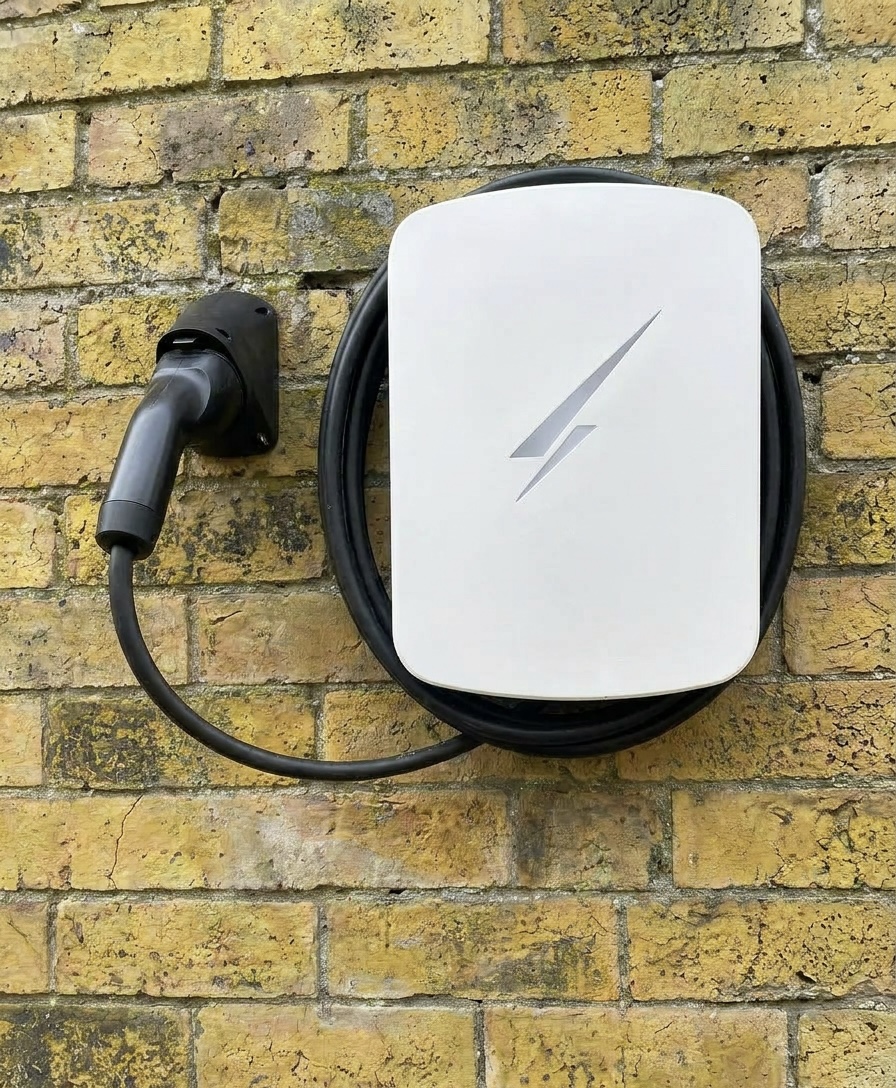
A standard home EV charger (also called an EVSE — Electric Vehicle Supply Equipment) typically operates at 7kW, which requires a 32A dedicated circuit. This is a meaningful load. For context, a typical electric shower draws around 8–10kW, and your entire kitchen might draw 30–40A across multiple circuits.
That dedicated 32A circuit needs:
- Its own breaker or protective device in the consumer unit
- Correct cable sizing and routing to where the charger will be installed
- An earthing arrangement that meets current standards
- Protection under BS 7671:2018 (the 18th Edition IET Wiring Regulations)
Before your electrician installs anything, they carry out a pre-installation survey. This is where the condition and capacity of your existing consumer unit is assessed.
What the Electrician Looks for on Survey
A competent electrician will examine several things before deciding whether your board can support the new charger circuit:
1. Spare ways in the consumer unit
Your consumer unit contains a set number of slots, called "ways", each holding a breaker or protective device. If every way is occupied, there is no room to add the 32A breaker needed for the EV charger circuit without modification.
2. Available spare capacity
Even with a free way, your main supply fuse or cut-out must have enough headroom to handle the additional 32A load alongside your existing circuits. If your property is supplied at 60A or 80A and running close to that, an upgrade to your supply may also be required — though this is a separate conversation with your network operator (DNO).
3. The age and type of consumer unit
This is often the deciding factor. The types of board we regularly encounter in older properties are:
| Type | Protection level | Likely outcome |
|---|---|---|
| Rewireable fuse board (Wylex-style) | No RCD protection | Upgrade strongly recommended |
| Plastic consumer unit with MCBs | Basic MCB protection, no RCBOs | Upgrade recommended |
| Older RCD-protected boards (split load) | Some RCD protection, no RCBOs | Assessment needed — may require upgrade |
| Modern metal RCBO consumer unit | Full RCBO protection per circuit | Likely suitable with a free way |
4. Overall installation condition
If the wiring observed during the survey shows signs of age, deterioration, or previous non-compliant work, your electrician may recommend an Electrical Installation Condition Report (EICR) before proceeding — particularly if the board is old.
When a Consumer Unit Upgrade Is Required
While no single rule states "you must upgrade your board for an EV charger", several conditions make an upgrade not just advisable but effectively unavoidable:
Rewireable fuse boards
If your property still has a rewireable fuse board — the kind with a wooden or Bakelite base and individual ceramic fuse carriers — it must be replaced before a compliant EV charger installation can be carried out. These boards offer no RCD protection (which guards against electric shock), have no mechanism to prevent overcurrent damage to wiring, and cannot accommodate a modern 32A RCBO. They are a significant safety concern independent of the EV charger question.
Plastic consumer units
Plastic consumer units were banned under the 18th Edition of BS 7671 due to fire risk. If your property has a plastic board, a compliant installation requires replacing it with a metal-cased consumer unit. The material restriction exists because plastic boards in confined spaces — under stairs, for example — present a significant fire propagation risk.
No spare ways
If your existing board is full, the options are: fit a dual RCD or RCBO unit alongside the existing board (sometimes called a "piggyback" arrangement), or replace the consumer unit entirely with a larger one. In most cases, a clean replacement with a modern RCBO board is the more reliable and future-proof solution.
Failure to meet current standards
If the board cannot be adapted to comply with BS 7671 requirements for the new circuit — including correct earthing, bonding, and protection — an upgrade is required before the installation proceeds.
The Modern Standard: RCBO Consumer Units
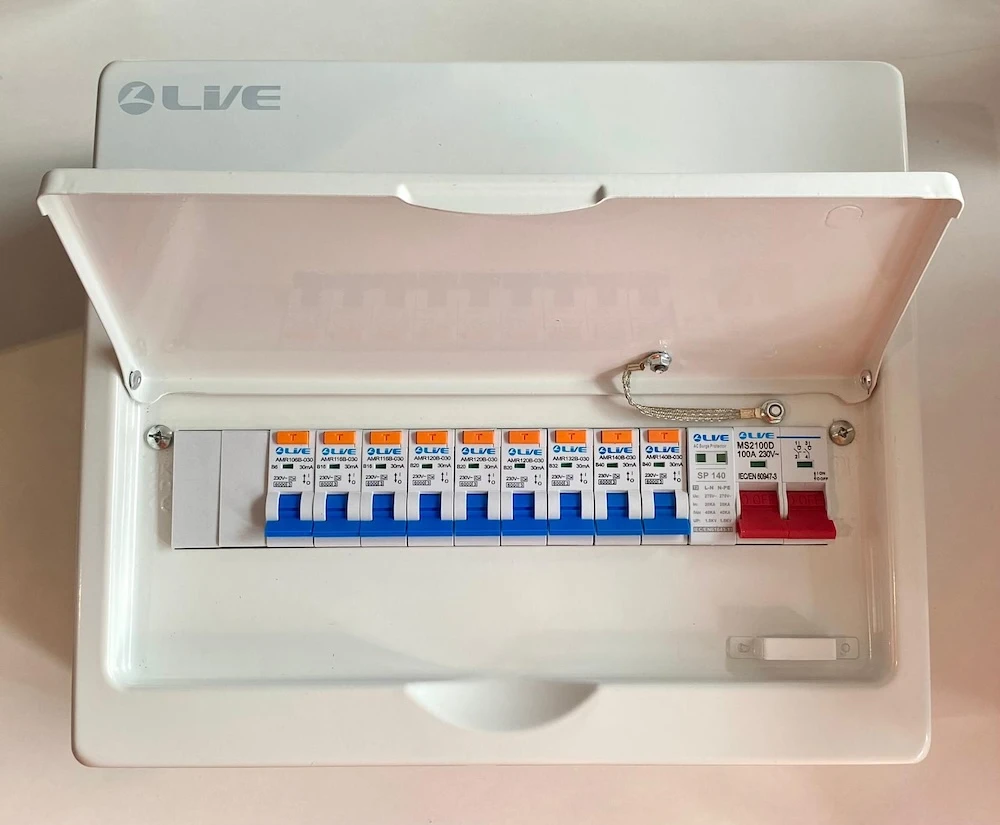
When a consumer unit upgrade is carried out alongside an EV charger installation, the current recommended standard is a metal RCBO consumer unit. Here is why this matters:
In an older split-load board, a single RCD protects multiple circuits. If one circuit develops a fault, the RCD trips — cutting power to every circuit it covers. This is commonly referred to as nuisance tripping and can be deeply disruptive.
An RCBO consumer unit gives every circuit its own RCBO — a combined overcurrent and residual current device. A fault on your EV charger circuit, for example, affects only that circuit. The rest of your home stays on.
SPDs: Now Required When You Fit a New Consumer Unit
If your consumer unit is replaced as part of the EV charger installation, there is one additional requirement to be aware of under the 18th Edition of BS 7671.
Surge Protection Devices (SPDs) must be fitted when installing a new consumer unit. An SPD protects all appliances connected to your installation from voltage surges — both the sudden catastrophic kind caused by a nearby lightning strike, and the smaller cumulative surges that silently degrade sensitive electronics over time.
The type of SPD required depends on your supply arrangement:
- Type 2 SPD: standard for most domestic properties supplied by an underground cable
- Type 1+2 SPD: required where the supply arrives via an overhead line (common in rural areas)
At Power Team Electrics, we fit surge protection as standard on every consumer unit we install.
Part P Certification: Why It Matters for This Work
Consumer unit replacement and EV charger installation are both notifiable works under Part P of the Building Regulations. This means the work must either be carried out by a Part P registered electrician who self-certifies, or be submitted to the local authority for inspection.
At Power Team Electrics, all notifiable works are fully certified and compliant with 18th Edition BS 7671. Every installation is documented correctly — this matters for your peace of mind, your property's insurance, and its resale value.
What to Expect from the Process
- Pre-installation survey — your electrician assesses the consumer unit, supply capacity, proposed cable route, and earthing arrangement.
- Quotation — if an upgrade is required, it will be quoted clearly alongside the EV charger installation. Power Team Electrics provides transparent, itemised pricing with no hidden costs.
- Installation day — the consumer unit is upgraded first, then the EV charger circuit is run and the charger is fitted. Typically completed in a single day.
- Certification — you receive the relevant Part P certificate, an Electrical Installation Certificate (EIC) for the new consumer unit, and documentation for the EV charger installation.
- Testing and handover — the installation is tested in full before we leave, and you are walked through how to use the charger.
Do You Always Need an Upgrade?
Not always. A modern home with a metal RCBO consumer unit installed within the last few years, with a free way available and adequate supply capacity, may need no board work at all. However, a significant proportion of homes — particularly those built before 2005 — have boards that will require attention before a compliant EV charger installation can be completed.
Coverage Area
Power Team Electrics carries out EV charger installations and consumer unit upgrades across the Home Counties, including:
Surrey (Guildford), Kent (Maidstone), Essex (Chelmsford), Hertfordshire (St Albans), Berkshire (Reading), Buckinghamshire (Milton Keynes), and Sussex (Brighton).
All work is carried out by qualified, registered electricians and complies fully with BS 7671:2018 (18th Edition).