
Installing an EV charger at home is one of the smartest things you can do as an electric vehicle owner. Charging overnight on a dedicated home unit is faster, cheaper per mile, and safer than relying on public charge points. But when you start asking for quotes, the range of prices can be bewildering — anywhere from £700 to well over £1,500. So what actually determines the cost, and how do you know whether a quote is fair?
This guide from Power Team Electrics — qualified electricians covering Surrey, Kent, Essex, Hertfordshire, Berkshire, Buckinghamshire, and Sussex — breaks down every factor that affects the price of a home EV charger installation, and explains what a good quote should include.
Typical EV Charger Installation Costs in the UK
For a standard 7kW single-phase home charger on a straightforward installation — short cable run, no consumer unit work required, no groundwork — you should expect to pay in the region of £800 to £1,100 all-in, including supply, fit, commissioning, and certification.
Where it gets more expensive:
- Cable runs over 10 metres: add £150–£400 depending on distance and how the cable is routed
- Consumer unit (fuse board) upgrade required: add £400–£900
- Trenching or groundwork (garage or outbuilding installations): add £200–£800 or more
- 3-phase charger installations: typically £1,200–£2,000+ depending on charger spec and site conditions
- Premium smart charger models: the charger unit itself can range from £250 for a basic tethered unit to £850+ for a high-specification smart charger with load management
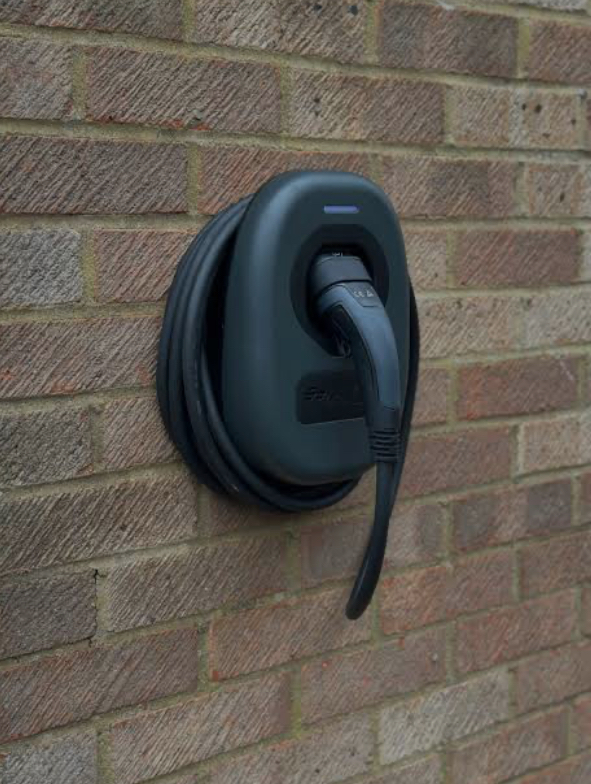
The Factors That Affect Your Installation Price
1. The Charger Model You Choose
Not all EV chargers are created equal. The charger unit itself accounts for a significant portion of the total cost, and the range of available models is wide.
- Budget tethered units (fixed cable, no app connectivity): £250–£400
- Mid-range smart chargers (app control, scheduled charging, load balancing): £400–£600
- Premium smart chargers (solar integration, dynamic load management): £600–£850+
At Power Team Electrics, we provide transparent, itemised quotes that separate the cost of the charger unit from the installation labour — so you always know exactly what you are paying for.
2. Cable Run Length
The cable run is the distance from your consumer unit (fuse board) to the location of the charger. This is one of the most significant variables in any installation quote.
| Cable Run | Estimated Additional Cost |
|---|---|
| Up to 10 metres | Included in standard quote |
| 10–20 metres | £100–£250 |
| 20–35 metres | £250–£400 |
| 35+ metres (outbuilding) | £400–£800+ |
3. Trenching and Groundwork
If your charger is being installed in a detached garage or outbuilding, the supply cable between the house and the outbuilding will almost certainly need to be buried underground using armoured cable, laid at the correct depth, and protected with cable tiles and marker tape in accordance with BS 7671:2018 (18th Edition).
As a guide, 10 metres of simple trenching across grass might add £200–£400. A 20-metre run that crosses a block-paved driveway could add £600–£900 or more, including reinstatement.
4. Whether Your Consumer Unit Needs Upgrading
Your consumer unit (fuse board) needs to have a suitable spare way for the new EV charger circuit. If your existing consumer unit is full, or if it is an older type that does not meet current regulations, an upgrade will be needed before the charger can be safely connected.
Signs that a consumer unit upgrade may be required:
- No spare ways available (all MCB slots are in use)
- An older rewireable fuse board or semi-enclosed unit
- A plastic consumer unit (now non-compliant under BS 7671:2018 Amd 2 for new work in certain locations)
- Lack of RCD protection on circuits
A consumer unit upgrade to a fully compliant metal RCBO board typically costs £400–£900 depending on the number of circuits and any remedial work required.
5. Property Type
Your property type influences several aspects of the installation:
- Terraced and semi-detached houses: typically a short cable run from the consumer unit to a front or side wall
- Detached houses: often slightly longer cable runs, but rarely require groundwork unless the driveway is at the rear
- Flats and apartments: significantly more complex; cable routing, landlord consent, building regulations, and shared supply considerations all come into play
- New-build properties: often have a dedicated EV charger circuit pre-installed; cost is lower as supply infrastructure is already in place
- Rural properties: may have a single-phase supply of limited capacity; some with overhead line supply may require a Type 1 SPD
Single-Phase vs Three-Phase: What Is the Difference and Does It Affect Cost?
The vast majority of UK homes have a single-phase supply, which supports charging speeds up to 7.4kW. For most drivers, overnight charging at 7kW will fully replenish a standard EV battery within 8–10 hours. This is the standard installation for residential properties.
Three-phase supply supports EV chargers delivering up to 22kW, cutting charge times to approximately 2–3 hours for a typical EV. However, most home EVs can only accept three-phase charging up to 7.4kW or 11kW on their onboard charger anyway.
| Supply Type | Max Charge Speed | Typical All-In Cost |
|---|---|---|
| 7kW single-phase | 7.4kW | £800–£1,200 |
| 22kW three-phase | 22kW | £1,200–£2,000+ |
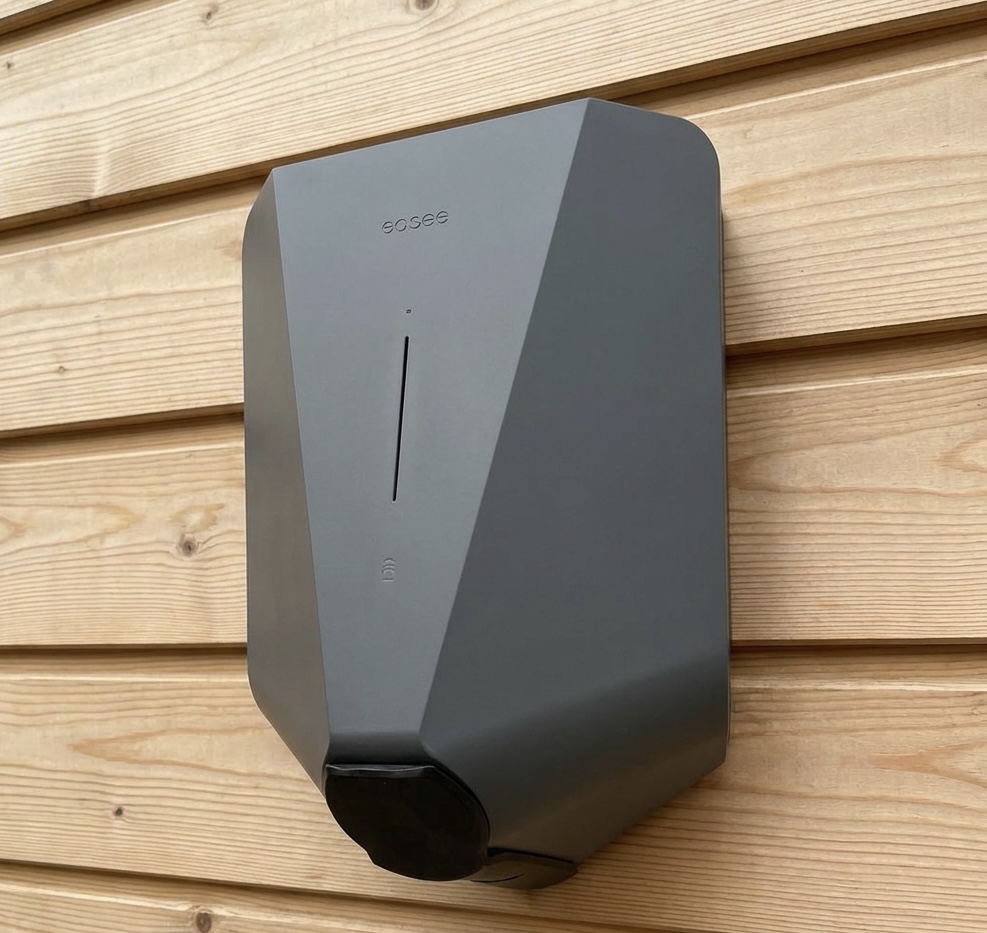
Why Do Quotes Vary So Much Between Installers?
Different charger specifications, assumed installation conditions, labour rates, and certification and compliance all drive price differences. A proper EV charger installation must be Part P notified (or self-certified by a Part P registered electrician) and tested to BS 7671:2018. Some installers skip this step — it is not visible immediately, but it becomes a problem later.
At Power Team Electrics, every quote is fully itemised and includes all certification, commissioning, and DNO notification where required. There are no hidden extras added on site.
What Should a Good EV Charger Installation Quote Include?
| Item | What to Look For |
|---|---|
| Supply of charger unit | Manufacturer and model specified; warranty details |
| All materials | Cable, conduit, back box, fixings, SWA where applicable |
| Installation labour | Fully inclusive, not subject to adjustment on site |
| Commissioning | Testing, pairing with vehicle and app, verifying charging speed |
| Electrical Installation Certificate (EIC) | Mandatory for any new circuit |
| Part P notification | Required for notifiable work in England and Wales |
| DNO notification | Required for chargers over 3.68kW on a single-phase supply |
| OZEV grant assistance | Where applicable |
The OZEV / LEVI Grant: Who Qualifies and How Much Is It Worth?
The Electric Vehicle Chargepoint Grant is currently worth up to £350 towards the cost of a home charger installation.
Who qualifies:
- You must own or have use of an eligible plug-in vehicle
- The property must be in the UK and must have dedicated off-street parking
- The grant applies to the installation of a smart chargepoint
The grant is claimed by your OZEV-registered installer on your behalf. Our OZEV-registered engineers handle the grant application as part of every eligible installation — you simply pay the reduced amount on the day.
Why Cheapest Is Not Always Best
The risks of choosing an uncertified or underqualified installer:
- No Part P notification: your installation does not meet Building Regulations — your insurer may refuse a claim following a fire or fault
- Undersized cable: a cable run too small for the load creates heat, which creates fire risk
- Cheap charger units from unknown manufacturers: off-market units may lack required protective features
- No commissioning: a charger not set up correctly may charge at a reduced speed or fail to communicate with your vehicle
All Power Team Electrics installations are carried out by qualified, registered electricians using 18th Edition compliant methods, with full certification and a workmanship guarantee.
Power Team Electrics: EV Charger Installation Across the Home Counties
Power Team Electrics provides EV charger installation across Surrey (Guildford), Kent (Maidstone), Essex (Chelmsford), Hertfordshire (St Albans), Berkshire (Reading), Buckinghamshire (Milton Keynes), and Sussex (Brighton).
Every installation begins with a no-obligation survey. You receive a fully itemised quote with no hidden extras. Visit www.powerteamelectrics.co.uk to get a quote or book a survey.