
If you have just bought an older property, or you are planning a renovation, there is a good chance someone has already mentioned the word "rewire." A surveyor's report flags the electrics. An estate agent says the wiring is old. A neighbour tells you their 1970s house needed completely redoing. Before long, you are mentally preparing for a bill of several thousand pounds and several weeks of disruption.
Here is what most people are not told: a full rewire is often unnecessary. And the only reliable way to know whether you need one is to have an Electrical Installation Condition Report (EICR) carried out before any decision is made.
At Power Team Electrics, we carry out EICRs regularly for homeowners across Surrey, Kent, Essex, Hertfordshire, Berkshire, Buckinghamshire, and Sussex. In many cases, the wiring turns out to be in far better condition than the visual cues suggest — and the homeowner avoids a five-figure job they did not need.
What Is a Full Rewire — and Why Is It So Disruptive?
A full rewire means replacing every cable in the property: the circuits running to each socket, light fitting, cooker, shower, and any other fixed electrical point. All of that wiring runs inside the walls, under floors, and through the ceiling. Getting to it typically means:
- Chasing out plaster along cable runs
- Lifting floorboards in every room
- Redecoration after the work is complete
- Moving out of at least part of the property while work is ongoing
Costs vary significantly depending on property size, but as a general guide:
| Property Size | Estimated Rewire Cost |
|---|---|
| One-bedroom flat | £2,500 – £4,000 |
| Two-bedroom house | £3,500 – £5,500 |
| Three-bedroom house | £5,000 – £8,000 |
| Four-bedroom house | £7,000 – £12,000+ |
These figures exclude redecoration. This is not a job to commit to without clear evidence that it is necessary.
What Actually Triggers the Assumption of Needing a Rewire?
In the majority of cases, homeowners assume they need a rewire for reasons that are visual, not technical. Common triggers include:
- An old consumer unit — a rewireable fuse board or a Wylex-type board with individual fuses
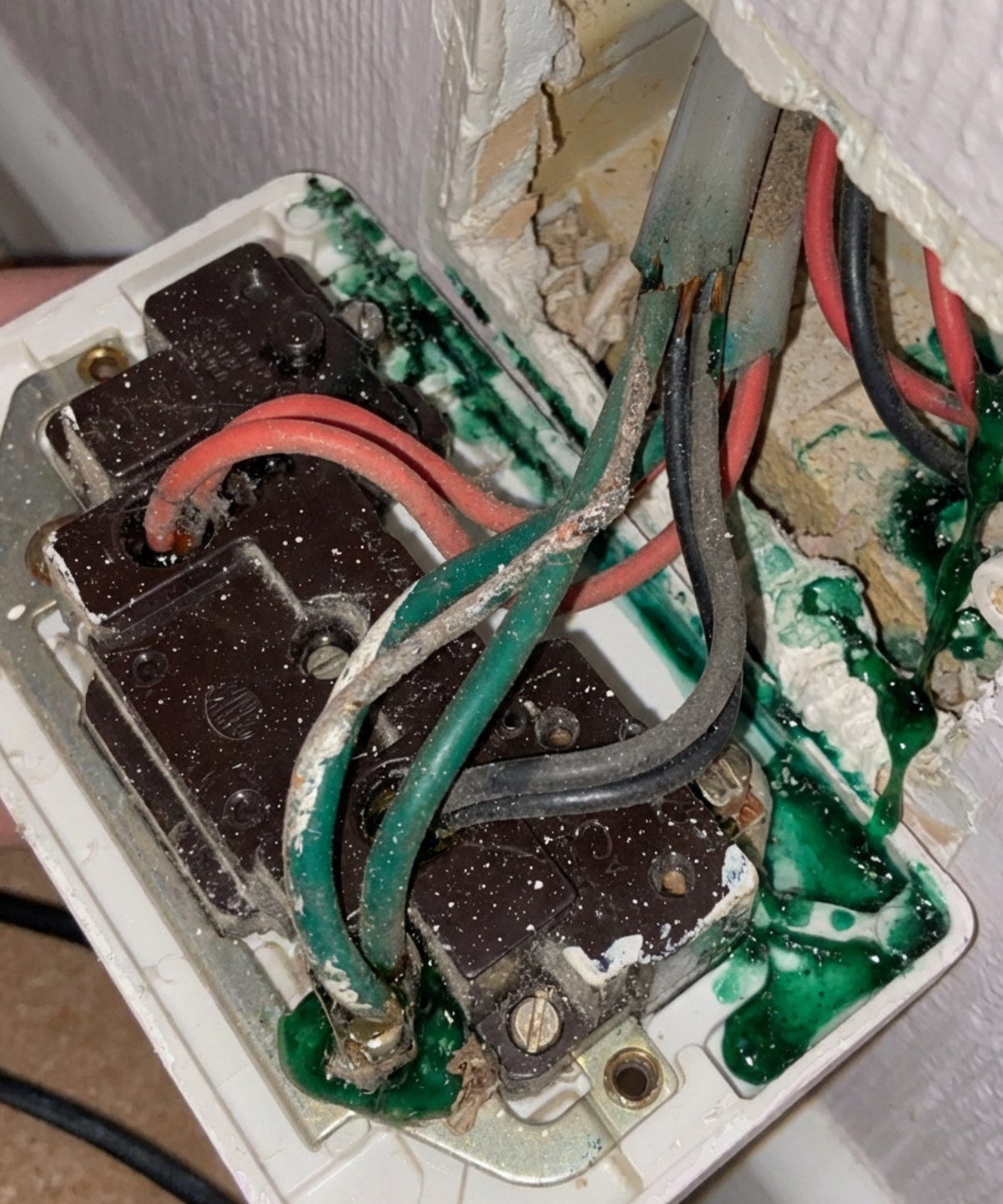
- Old-style round-pin sockets or black Bakelite switches — cosmetically dated, but not necessarily electrically dangerous
- A property built before 1970, which a surveyor notes as a flag
- A previous owner's comment that "the wiring is old"
- A surveyor or estate agent report stating "the electrical installation requires updating"
That last point deserves particular attention. Surveyor notes on electrics are almost always based on visual observation. A surveyor is not an electrician, and noting that the consumer unit looks outdated is not the same as saying the wiring has failed. These reports are a prompt to investigate further — not a diagnosis.
What an EICR Actually Tells You
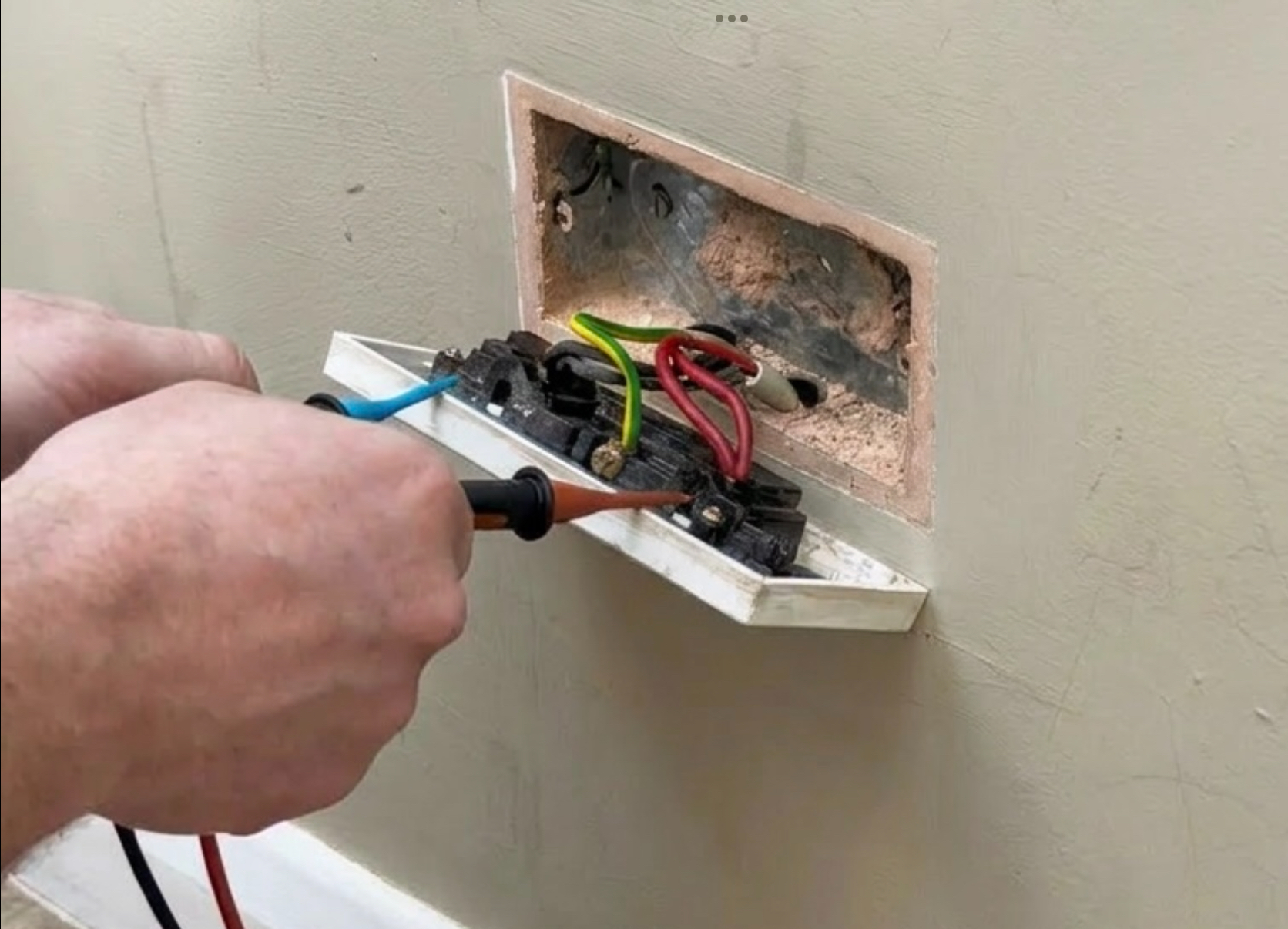
An EICR is a circuit-by-circuit inspection of your entire electrical installation, carried out by a qualified electrician. It tests each circuit for insulation resistance, earth continuity, polarity, and protective device operation. Every observation is coded:
- C1 — Danger present. Requires immediate remedial action.
- C2 — Potentially dangerous. Action required as soon as possible.
- C3 — Improvement recommended. Advisory; not a mandatory failure.
- FI — Further investigation required.
The report also results in an overall outcome: Satisfactory or Unsatisfactory.
Crucially, the report separates the condition of the fixed wiring (the cables behind the walls) from the condition of the consumer unit and accessories (sockets, switches, and other fittings). These are very different things — and understanding the difference is the key to avoiding an unnecessary rewire.
The Outcome Most Older Properties Actually Get
For properties built in the 1960s through to the 1980s, the most common finding is this:
The fixed wiring — the cables behind the walls and under the floors — is still in serviceable condition. PVC-insulated cable, which became standard from the 1960s onwards, has a long service life. Where it has not been disturbed or mechanically damaged, it often tests well decades later.
The consumer unit is outdated. A plastic board with no RCD protection, or a rewireable fuse board, will almost certainly result in C1 or C2 codes. These represent a genuine compliance issue — but they relate to the board, not the wiring behind it.
The sockets and switches are old. Cosmetically dated fittings are typically raised as C3 advisory improvements, not mandatory failures.
In this scenario — which is common — the correct course of action is not a rewire. It is:
- Replace the consumer unit with a modern metal-clad RCBO board, compliant with the 18th Edition of BS 7671. Each circuit gets its own RCBO, eliminating nuisance tripping and providing both overload and residual current protection independently per circuit. A Surge Protection Device (SPD) is fitted as standard.
- Replace sockets and switches cosmetically. This does not require touching the wiring behind them. New fittings can be swapped in on the existing cables, giving a fully modern appearance.
- No rewire. The cables stay in place because they tested satisfactorily.
The difference in cost is significant. A consumer unit replacement typically falls in the range of £600 to £1,200 depending on the number of circuits. Replacing sockets and switches throughout a house might add another few hundred pounds. The total is still a fraction of the cost of a full rewire.
When Is a Full Rewire Actually Necessary?
There are circumstances where a rewire is the right answer — and an EICR will make that clear:
The wiring insulation has degraded. Pre-1960s properties may have rubber-insulated or lead-sheathed cables. Both materials deteriorate over time: rubber becomes brittle and cracks; lead sheathing corrodes. When insulation is in this condition, cable replacement is unavoidable.
The EICR returns multiple C1 and C2 codes across the wiring circuits, not just the board. A handful of advisory codes on sockets is very different from failure codes on every ring final, radial, and lighting circuit.
The property uses aluminium wiring. A small number of 1960s and 1970s properties were wired using aluminium conductors rather than copper. Aluminium wiring requires specialist assessment and, in most cases, replacement.
Major structural alterations are planned anyway. If you are removing walls, moving rooms, adding a loft conversion, or fundamentally reconfiguring the layout, new circuit runs will be needed in any case.
The installation is so old that no further extensions or modifications are safe. If the existing installation cannot safely accommodate additional circuits, replacement becomes the practical answer.
Why an EICR Is the Right First Step
Without an EICR, any recommendation to rewire is based on assumption, not evidence. An electrician who advises a full rewire without first testing the installation is not giving you a diagnosis; they are giving you a guess.
The EICR gives you:
- A factual, circuit-level assessment of what is actually in good condition and what is not
- A clear basis for prioritising work — what must be done now versus what is advisory
- Documentation that has value for insurance purposes and future property sales
- Confidence that the work you commission is the work you actually need
At Power Team Electrics, we never recommend work that is not required. If your EICR comes back showing the wiring is in good condition, we will tell you so clearly — and we will explain exactly what does need attention and what the options are.
EICR Pricing at Power Team Electrics
| Property Type | EICR Price |
|---|---|
| Studio flat | From £200 |
| Flat (one or two bedroom) | From £280 |
| House (up to three bedroom) | From £350 |
| Larger house (four bedroom+) | From £400 |
Set against the cost of an unnecessary rewire — which may run to £5,000, £8,000, or more — an EICR is a very small investment to make before committing to major works.
We are Part P certified and 18th Edition compliant, working across Surrey (Guildford), Kent (Maidstone), Essex (Chelmsford), Hertfordshire (St Albans), Berkshire (Reading), Buckinghamshire (Milton Keynes), and Sussex (Brighton).