
Most people only think about their electrics when something stops working. But the wiring hidden behind your walls, inside your consumer unit (fuse board), and running to every socket, switch, and light fitting in your home is ageing every year — often invisibly. An EICR is the professional health check that tells you exactly what state it is in.
This guide explains what an EICR is, what the electrician actually does during one, how to read the report codes, how long it takes, and what it costs — so you can make an informed decision about your property.
What Does EICR Stand For?
EICR stands for Electrical Installation Condition Report. It is a formal, written assessment of the condition of a property's fixed electrical installation — everything that is wired permanently into the building.
That includes:
- The consumer unit (fuse board) — the main switch, circuit breakers, RCDs, and RCBOs
- All fixed wiring running through walls, floors, and ceilings
- Sockets and switches
- Light fittings and ceiling roses
- Bonding and earthing connections
- Any permanently wired equipment, such as electric showers, cooker connections, and immersion heaters
What an EICR does not cover is equally important to understand. It does not assess portable appliances — kettles, televisions, washing machines, and similar items. Those are covered by a separate PAT (Portable Appliance Test). An EICR is purely about the fixed infrastructure of your electrical system.
Why Does It Matter?
Electrical wiring degrades over time. Insulation becomes brittle, connections loosen, and components that were installed to the standards of a previous era no longer meet current regulations. According to BS 7671:2018 (the 18th Edition Wiring Regulations), electrical installations must be periodically inspected and tested to confirm they remain safe.
The consequences of ignoring ageing wiring can be severe:
- Electrical fires — faulty or deteriorating wiring is one of the leading causes of house fires in the UK
- Electric shock — absent or inadequate earthing and RCD protection leaves occupants exposed
- Insurance complications — an insurer may refuse a claim if a fire investigation reveals the installation was not maintained
What Does the Electrician Actually Do?
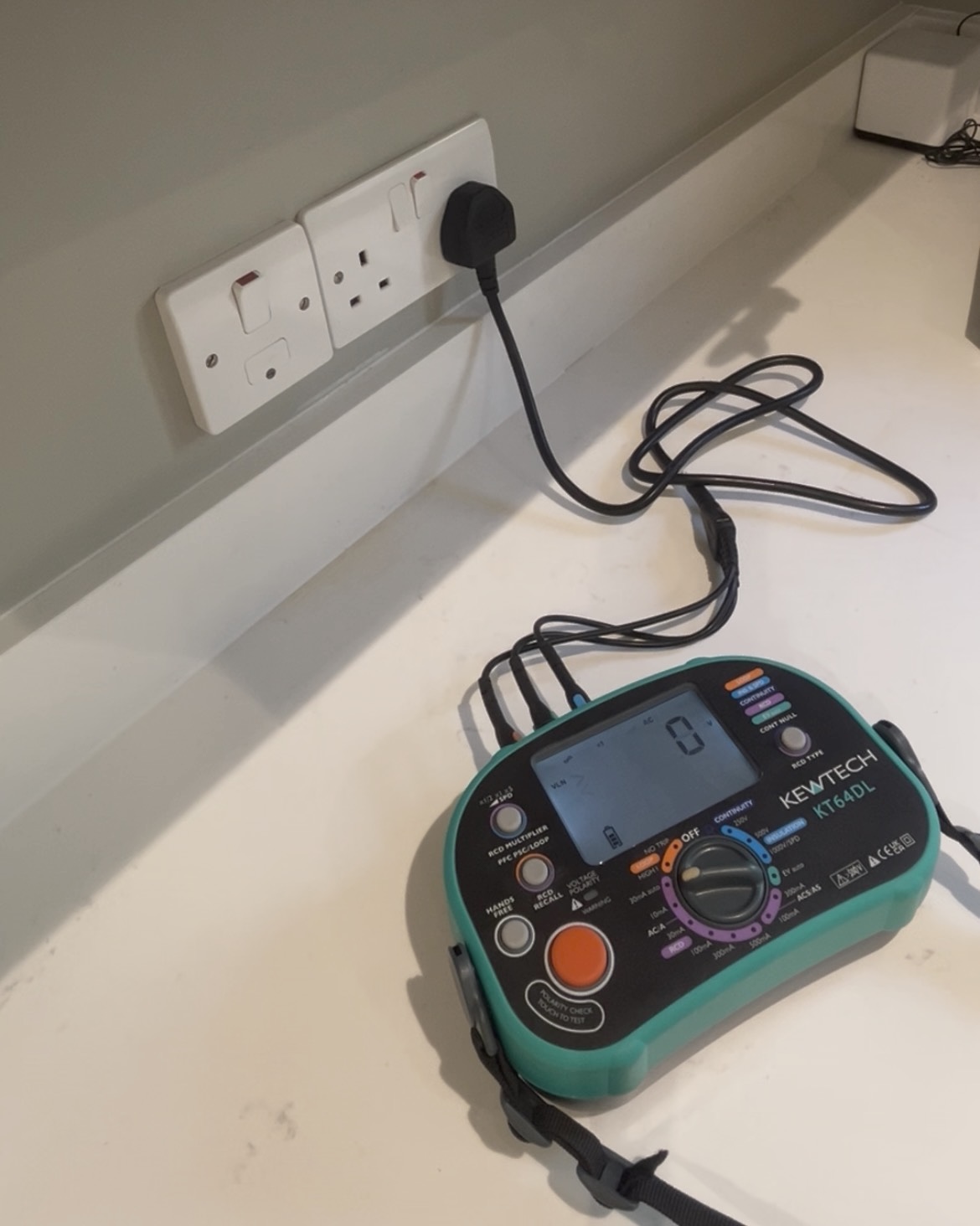
A qualified electrician carries out an EICR in two stages: a visual inspection and a series of electrical tests.
Visual Inspection
- Checking the consumer unit for signs of overheating, burning, corrosion, or non-compliant components
- Confirming that circuits are correctly labelled and that the board is appropriate for the property
- Inspecting accessible wiring for damage, incorrect cable types, or inadequate protection
- Checking sockets and switches for physical damage, loose fittings, or signs of arcing
- Verifying bonding connections
Electrical Testing
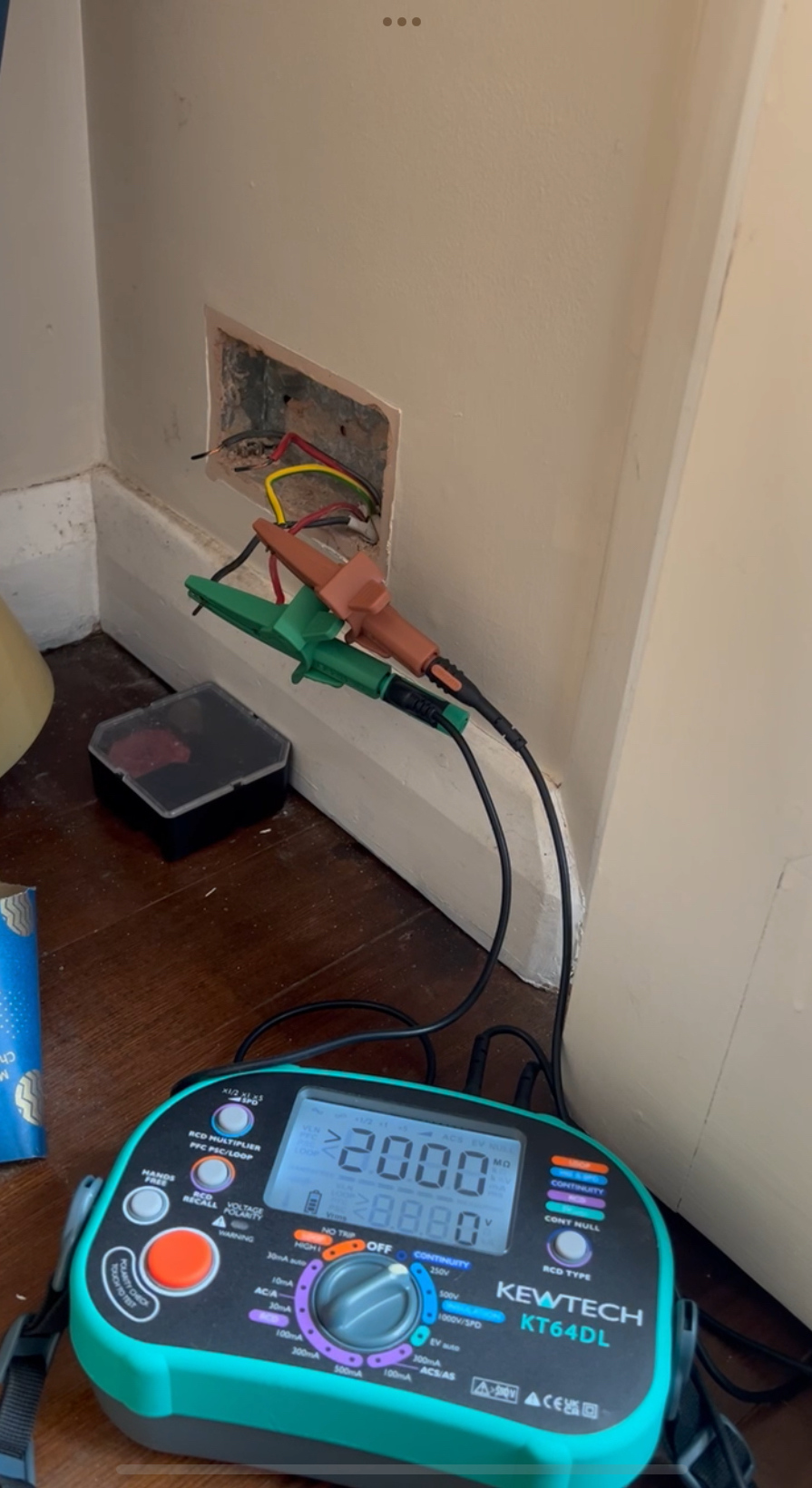
- Insulation resistance testing — checks that the insulation around the wiring has not broken down
- Earth continuity testing — confirms that every metal part that should be earthed actually is
- Polarity checks — verifies that live, neutral, and earth conductors are connected correctly throughout every circuit
- RCD testing — checks that residual current devices operate within the time limits specified in BS 7671
- Loop impedance testing — measures the resistance of the earth fault path
Every test result is recorded numerically. The completed report lists measured values alongside the design values that the installation should meet.
How to Read the EICR Codes
| Code | Meaning | Report Outcome |
|---|---|---|
| C1 | Danger present — risk of injury or death. Immediate remedial action required. | Unsatisfactory |
| C2 | Potentially dangerous — urgent remedial action required. | Unsatisfactory |
| C3 | Improvement recommended — does not meet current standards but is not dangerous. | Satisfactory |
| FI | Further investigation required — the electrician cannot confirm safety without additional access or testing. | Unsatisfactory |
A C3 code does not mean your installation has failed. It means the installation does not comply with the current edition of the wiring regulations — which is often simply because it predates them. A property rewired in 2005 will commonly receive C3 codes when assessed against the 2018 Edition. That is not a cause for alarm; it is a recommendation to bring things up to date when practical.
A C1 or C2 code represents a genuine concern that should be addressed promptly.
What Happens at the End of the Inspection?
Once all visual checks and tests are completed, the electrician compiles the formal EICR document. This includes:
- The overall verdict: Satisfactory or Unsatisfactory
- A full schedule of circuits tested, with recorded test values
- A list of every coded observation, with its code classification and description
- The recommended date for the next inspection
- The certifying electrician's details, including their qualification reference
Keep this document safely. It is an important record for your property and will be required by insurers, mortgage lenders, solicitors, and local authority housing teams if asked.
How Long Does an EICR Take?
- Studio flat — approximately 2 hours
- One or two-bedroom flat — approximately 2–3 hours
- Two or three-bedroom house — approximately half a day
- Larger house (four or more bedrooms) — a full day or more
At Power Team Electrics, we set aside a minimum of two hours for the smallest properties and plan for a full day on larger homes. Rushing an EICR is not in anyone's interest — thorough testing takes time.
How Often Should You Have an EICR?
| Property Type | Recommended Frequency | Legal Requirement? |
|---|---|---|
| Owner-occupied home | Every 10 years (every 5 is better practice) | No |
| Rental property | Every 5 years | Yes — Electrical Safety Standards in the Private Rented Sector (England) Regulations 2020 |
| At change of occupancy | Before new tenant moves in | For landlords — yes |
| Following major electrical work | On completion of significant works | Recommended |
| Property purchase | Before or shortly after completion | Strongly recommended |
EICR Pricing at Power Team Electrics
| Property Type | Starting Price |
|---|---|
| Studio flat | From £200 |
| Flat | From £280 |
| House | From £350 |
| Larger home | From £400 |
Prices reflect the time and thoroughness required to do the job properly. We do not cut corners to offer artificially low prices, and we do not add surprise charges after the inspection.
What Happens If the Report Is Unsatisfactory?
If your report comes back with a C1 or C2 finding, the next step is remedial work. The nature of that work depends on what the inspection found — it might be as simple as replacing a faulty socket, or it might indicate that the consumer unit needs upgrading to a modern 18th Edition compliant board with RCBO protection.
Power Team Electrics carries out both the EICR and any follow-on remedial work, so you do not need to manage multiple contractors.
Who Can Carry Out an EICR?
An EICR must be carried out by a qualified electrician registered with a Government-approved Part P competent person scheme, such as NICEIC, NAPIT, or ELECSA.
At Power Team Electrics, every EICR is carried out by a qualified, 18th Edition compliant electrician to the full requirements of BS 7671:2018. Our reports are formal, signed documents accepted by insurers, local authorities, and property solicitors.
Book Your EICR with Power Team Electrics
Power Team Electrics provides EICR inspections across the Home Counties, including Surrey (Guildford), Kent (Maidstone), Essex (Chelmsford), Hertfordshire (St Albans), Berkshire (Reading), Buckinghamshire (Milton Keynes), and Sussex (Brighton).
Visit www.powerteamelectrics.co.uk to get a quote or book an inspection.