If you have recently had an Electrical Installation Condition Report (EICR) carried out on your property — or you are a landlord trying to understand a report before taking action — the codes on the certificate can look confusing. C1, C2, C3, FI: what do they actually mean? Which ones are serious? Which ones do you have to fix?
This guide explains every EICR code in plain language, with real-world examples of what each one looks like in practice.
What Is an EICR?
An Electrical Installation Condition Report is a formal assessment of the condition of the fixed electrical installation in a property. It covers the consumer unit (fuse board), wiring, sockets, switches, lighting circuits, and earthing and bonding arrangements.
The electrician tests and inspects every part of the installation they can access, then codes each observation according to its severity. The overall report is then given one of two verdicts: Satisfactory or Unsatisfactory.
The Four EICR Codes
C1 — Danger Present: Risk of Injury
A C1 code means the installation poses an immediate danger. This is the most serious classification an EICR can carry. Where a C1 is identified, the inspecting electrician should — wherever possible — make the hazardous part safe before leaving the property.
An EICR that contains a C1 is unsatisfactory. The property should not be occupied or used normally until the C1 observation has been rectified and confirmed safe.
What does a C1 look like in practice?
- Exposed live parts that can be touched — a live terminal accessible through a damaged fitting, or a missing cover plate on a socket or junction box that leaves conductors within reach
- A missing fuse carrier in an older fuse board — leaving the live busbars of the consumer unit exposed and accessible
- A cable with missing or damaged insulation — where the copper conductors are accessible and can be touched, creating a direct risk of electrocution
For landlords, the Electrical Safety Standards in the Private Rented Sector (England) Regulations 2020 require that all C1 observations are remedied within 28 days of the report — or sooner if the certificate specifies. In practice, a C1 usually demands immediate action.
C2 — Potentially Dangerous: Urgent Remedial Action Required
A C2 code means the installation is not immediately dangerous, but it could become dangerous. The risk is real — it simply has not yet manifested as an immediate hazard.
An EICR that contains a C2 is also unsatisfactory.
What does a C2 look like in practice?
Plastic consumer unit (fuse board)
Plastic consumer units were banned under BS 7671:2018 (the 18th Edition Wiring Regulations). A plastic board is a C2 observation — particularly when installed under the stairs or near a fire escape route.
The reason is straightforward: if a fault occurs inside a plastic consumer unit, the board itself can catch fire. Plastic burns and spreads flame, which can quickly block an escape route and create a life-threatening situation. A metal consumer unit contains any fire within the enclosure. This is not a hypothetical risk — it is the precise reason 18th Edition regulations mandated the change.
Consumer unit with no RCD protection
An RCD (Residual Current Device) is the component in your fuse board that provides protection against electrocution. Without RCD protection, if water enters an appliance, a cable is damaged, or any conductor becomes live that should not be — there is nothing to cut the power before you receive a potentially fatal electric shock.
A consumer unit with no RCD protection is a C2 because the absence of this safeguard creates a serious risk under any number of ordinary fault conditions: a nail put through a wall cable, a faulty appliance, a washing machine flood. No RCD = no electrocution protection = C2.
Other common C2 observations:
- Overcurrent protection that does not match the rating of the cable it protects — creating a risk of overheating and fire
- Absence of earthing on circuits where earthing is required
- Missing or inadequate supplementary bonding in high-risk zones such as bathrooms
For landlords, C2 remedial work must be completed within 28 days of the report being issued.
C3 — Improvement Recommended
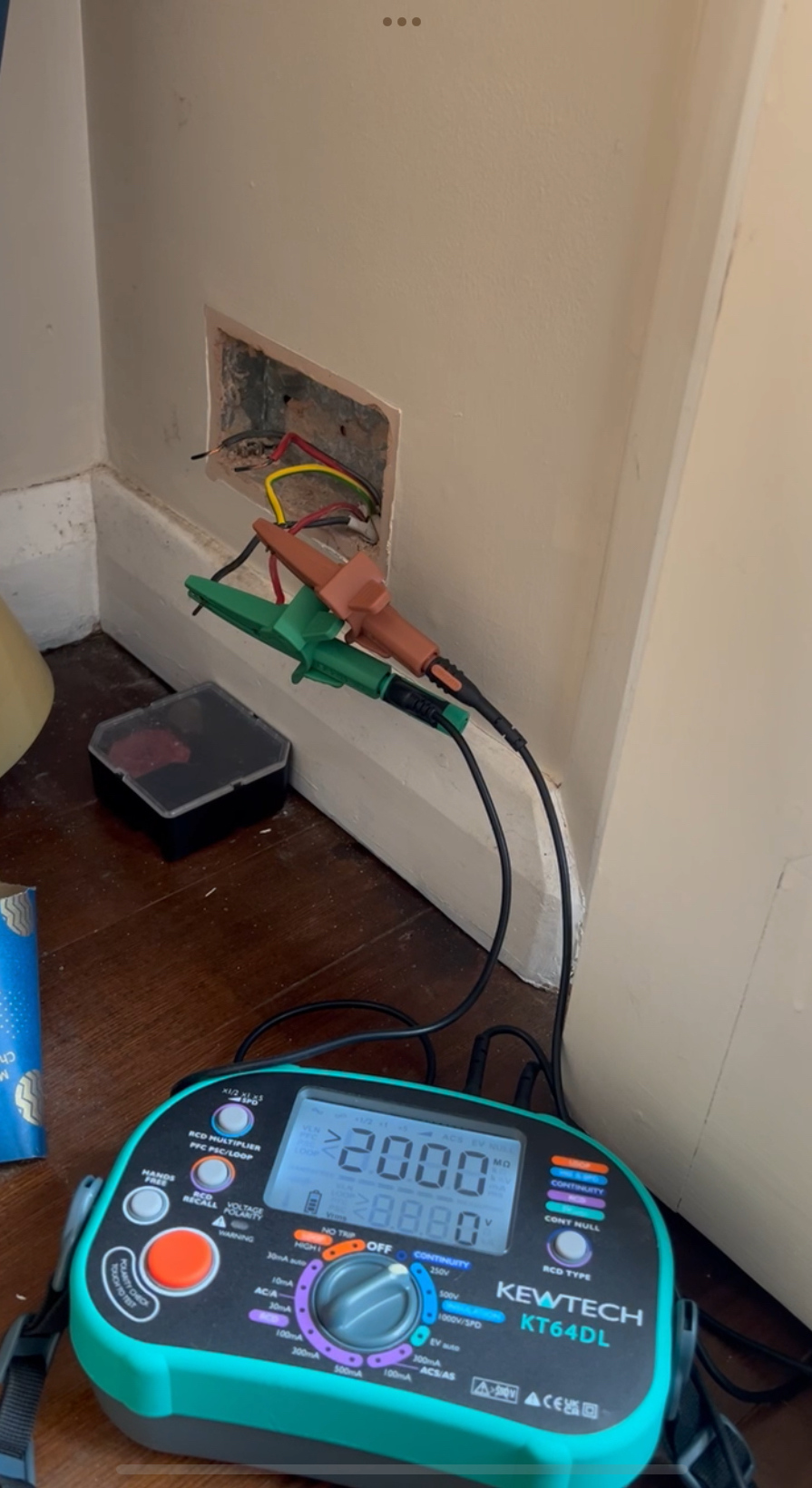
A C3 code means the installation is safe but does not meet current best-practice standards. A C3 does not make an EICR unsatisfactory.
A report containing only C3 observations — and no C1s or C2s — is a pass. The electrician is flagging something that could be improved, but is recording it as a recommendation rather than a safety deficiency.
What does a C3 look like in practice?
- Older wiring that is still functional — older twin and earth cable that remains serviceable but does not reflect current installation practice
- No Surge Protection Device (SPD) — SPDs are required on all new consumer unit installations under 18th Edition Amendment 2, but are not a legal obligation on existing installations that have not been upgraded
- Certain older wiring methods that were acceptable under previous editions of the regulations and remain safe in use, but would not be used in a new installation today
Homeowners often choose to address C3 observations when already having other electrical work carried out. For example, if you are having your consumer unit upgraded, fitting a Surge Protection Device at the same time is a natural, cost-effective step that resolves any SPD-related C3 and protects all appliances from surge damage.
FI — Further Investigation Required
An FI code means the electrician has identified something they cannot fully assess from what is visible or accessible during the inspection. More investigation is needed before the overall condition of that part of the installation can be confirmed.
An FI does not automatically make a report unsatisfactory. However, depending on what the further investigation reveals, the outcome may result in a C1 or C2 being raised.
What does an FI look like in practice?
- A suspected concealed joint in a floor void or ceiling void — where evidence suggests there may be an unsafe joint hidden behind a surface they cannot open
- A circuit whose origin cannot be traced — where a circuit exists but the electrician cannot identify where it begins or confirm it has appropriate protection
- A piece of equipment that cannot be accessed or fully tested during the inspection
What Does Satisfactory or Unsatisfactory Mean Overall?
| Verdict | Condition |
|---|---|
| Satisfactory | No C1 codes, no C2 codes. C3 codes are acceptable. FI codes must be investigated and resolved satisfactorily. |
| Unsatisfactory | One or more C1 or C2 codes are present. Remedial work is required before a satisfactory certificate can be issued. |
What Happens After an Unsatisfactory EICR?
- Review the observations — understand which codes have been raised and why
- Prioritise C1 observations — these require immediate attention
- Plan remedial work for C2 observations — within the 28-day window for landlords, and as a matter of genuine urgency for homeowners
- Investigate any FI observations
- Obtain a new certificate — once remedial work is completed
For properties with older consumer units — particularly plastic boards or boards with no RCD protection — remedial work often involves a consumer unit upgrade to a modern 18th Edition compliant metal unit fitted with RCBOs. This addresses the most common C1 and C2 findings in a single piece of work.
Power Team Electrics: EICR and Remedial Work Across the Home Counties
At Power Team Electrics, we carry out EICRs and remedial electrical work for homeowners, landlords, and small businesses across Surrey (Guildford), Kent (Maidstone), Essex (Chelmsford), Hertfordshire (St Albans), Berkshire (Reading), Buckinghamshire (Milton Keynes), and Sussex (Brighton).
All notifiable works are fully certified and compliant with 18th Edition BS 7671.