
Electric vehicles are no longer a niche choice. In 2024, nearly one in four new cars sold in the UK was a pure electric or plug-in hybrid vehicle, and that share is rising every year. For landlords, this shift raises a straightforward question: what are your obligations when it comes to EV charging — and what is the opportunity if you act early?
This guide covers everything landlords need to know: the regulations that apply to your property, the grant funding available to you, the electrical survey work that should happen before any charger goes in the ground, and how to keep everything documented correctly for compliance.
Power Team Electrics is Part P certified and 18th Edition compliant, installing EV chargers across Surrey, Kent, Essex, Hertfordshire, Berkshire, Buckinghamshire, and Sussex for landlords managing single lets, multi-lets, and HMOs.
Why Landlords Are Installing EV Chargers Right Now
The most immediate reason is tenant demand. EV ownership is growing fastest among commuters aged 30 to 55 — precisely the demographic that rents in the Home Counties. Tenants with EVs actively filter properties by whether an EV charger is included. Properties that offer one consistently command higher asking rents and spend fewer days vacant.
The second reason is future-proofing. The UK government's ban on new petrol and diesel car sales takes effect in 2035. Every property you own that lacks EV charging infrastructure will become progressively harder to let — and more expensive to retrofit — as the decade progresses.
EV Ready Regulations: What UK Building Regs Now Require
The Building Regulations Amendment 2021 (Part S) introduced mandatory EV infrastructure requirements for certain residential building work in England.
What Triggers the Requirement?
Part S applies when:
- New residential dwellings are built — every new home with associated parking must have an EV charge point (or cable routes for future installation) installed from the outset.
- Existing buildings undergo major renovation — where a building is being substantially renovated with an associated car park, EV infrastructure must be incorporated.
- Residential buildings with more than ten parking spaces are subject to additional requirements.
What Does This Mean Practically for Landlords?
If you are carrying out a significant renovation — a full rewire, a loft conversion with planning permission, an extension — your building control officer may require EV infrastructure as a condition of sign-off. Power Team Electrics flags this at survey stage, so you are never caught out at the end of a project.
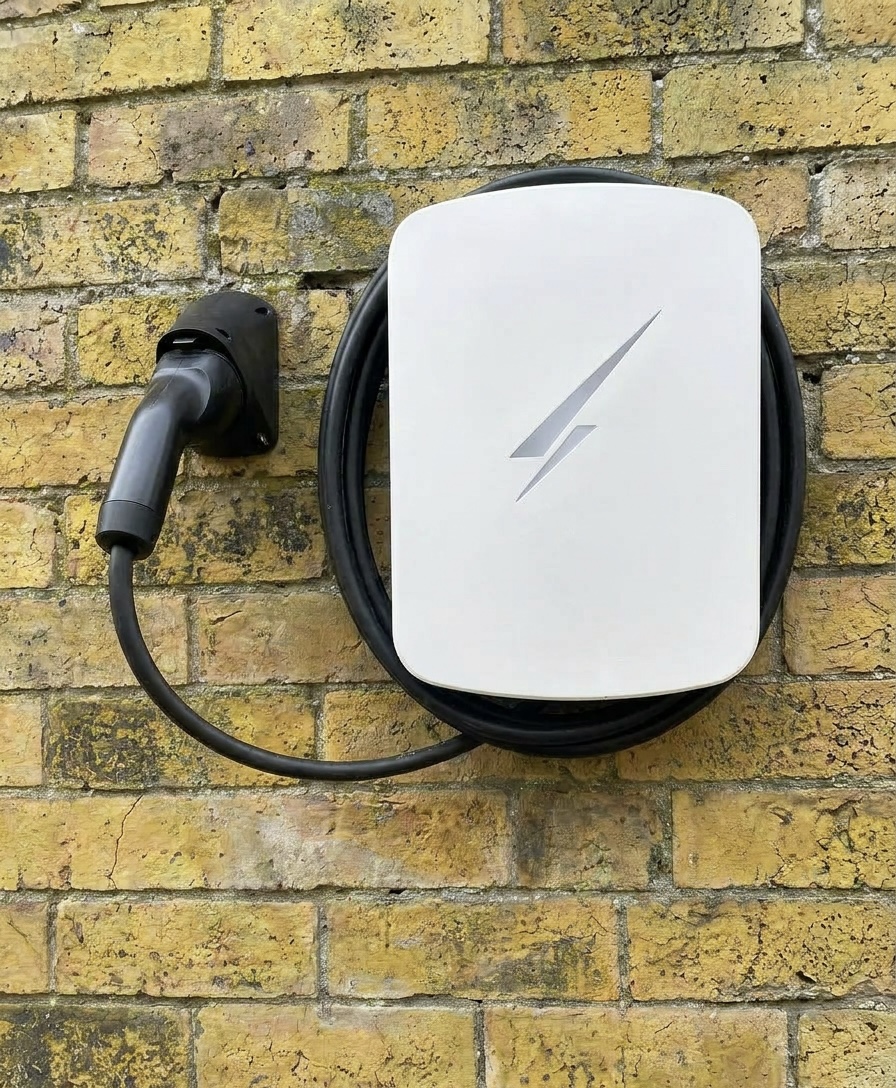
The Landlord EV Chargepoint Grant
| Feature | Detail |
|---|---|
| Grant value | Up to 75% of the cost of purchase and installation, capped at £350 per socket |
| Number of sockets | Up to 200 sockets per applicant across the landlord's portfolio |
| Eligible properties | Flats, HMOs, purpose-built rental units, blocks of flats |
| Who applies | The landlord (or their appointed installer on their behalf) |
| Eligible charger types | Smart charge points on the OZEV approved product list |
| Installer requirement | The installer must be OZEV-authorised |
This grant structure means a landlord with a portfolio of, say, twelve flats can apply for grant funding across all twelve properties. The 200-socket cap is generous enough to cover almost any portfolio below institutional scale.
Power Team Electrics is OZEV-authorised, meaning we can apply for the grant on your behalf and handle the administrative process as part of the installation.
What the Grant Does Not Cover
- Consumer unit upgrades required to support the additional load
- Significant cable routes where the distribution board is far from the parking location
- DNO connection upgrades if the incoming supply is insufficient
Planning Permission for EV Chargers at Rental Properties
In most cases, planning permission is not required for installing a single domestic EV charger under permitted development rights.
Flats and HMOs
Permitted development rights do not apply to flats in the same way they do to houses. If your rental property is a flat, or if the charger would be installed on common parts or external walls of a block, you may need consent from the freeholder or management company.
Listed Buildings and Conservation Areas
Properties in conservation areas or those that are listed may require listed building consent or planning permission.
HMOs
For HMOs, the installation logistics depend on whether the charger is for a specific tenant's exclusive use or shared. Shared chargers may require billing infrastructure.
The Link Between EV Charger Installation and the EICR
Before any EV charger is installed at a rental property, the existing electrical installation should be assessed.
Under the Electrical Safety Standards in the Private Rented Sector (England) Regulations 2020, landlords are already required to ensure an Electrical Installation Condition Report (EICR) is carried out at least every five years.
An EV charger installation is an ideal time to schedule your EICR if it is due or approaching its renewal date:
- An EICR will identify whether the consumer unit has sufficient capacity to support an EV charger.
- It will flag any pre-existing faults that could be exacerbated by the additional load.
- Carrying out both works at the same time reduces disruption and, often, the total cost.
The Pre-Installation Survey: What We Check
Consumer Unit Capacity
A standard 7kW home EV charger draws around 32 amps continuously. The survey confirms whether a dedicated circuit can be added without exceeding the board's rated capacity.
Cable Routes
We assess the most practical and aesthetically acceptable cable route and flag any significant additional work required.
DNO Notification
For chargers above 3.68kW, the Distribution Network Operator (DNO) must be notified before installation. In some cases, the DNO may require a supply upgrade. Power Team Electrics manages the DNO notification process.
Earthing and Bonding
EV chargers must be installed with appropriate earthing arrangements, including a Protective Earthing and Neutral (PEN) fault protection system where a TN-C-S (PME) earthing arrangement is in use.
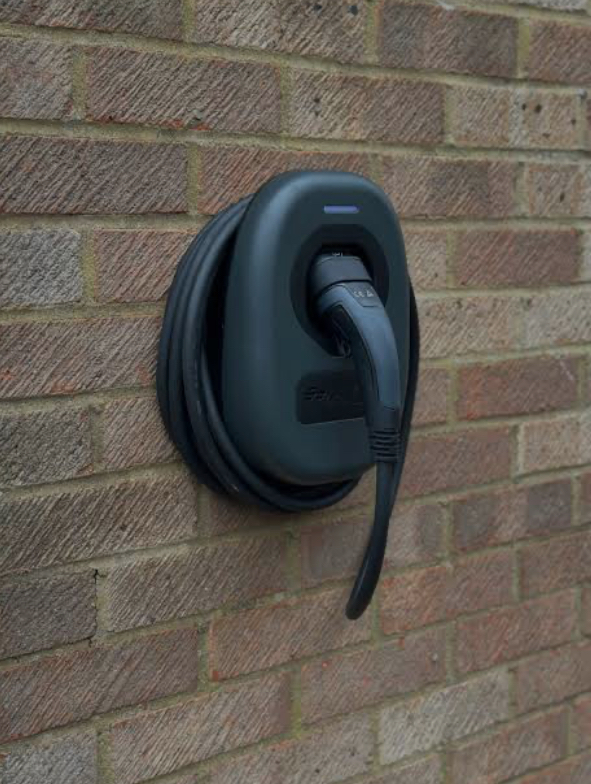
Billing Tenants for EV Charging
Option 1: Dumb Charger on the Landlord Supply
A basic charger draws electricity from the landlord's supply. The landlord pays for the electricity and either absorbs the cost or builds it into the rent. This works best for short-term lets or situations where tenant usage is expected to be low.
Option 2: Smart Charger with Tenant Billing
A networked smart charger connects to a billing platform that meters individual charging sessions and charges the tenant directly. Power Team Electrics recommends this approach for most landlords with longer-term tenancies, as it:
- Eliminates ongoing electricity cost exposure for the landlord
- Gives tenants a clear, metered record of their charging
- Is compliant with the Electric Vehicles (Smart Charge Points) Regulations 2021
The grant-eligible chargers on the OZEV approved product list are all smart-enabled, so choosing a qualifying charger for the grant also means you are automatically meeting the smart charger regulatory requirement.
Part P Certification and Landlord Documentation
Every EV charger installation carried out by Power Team Electrics is notified to Building Control under Part P of the Building Regulations. As the landlord, you receive:
- An Electrical Installation Certificate (EIC) confirming the installation meets BS 7671
- A Building Regulations Compliance Certificate
- Documentation confirming the charger is on the OZEV approved product list
This documentation should be retained with your property records alongside your EICR.
Coverage
Power Team Electrics carries out EV charger installations for landlords across the Home Counties:
- Surrey — Guildford and surrounding areas
- Kent — Maidstone and surrounding areas
- Essex — Chelmsford and surrounding areas
- Hertfordshire — St Albans and surrounding areas
- Berkshire — Reading and surrounding areas
- Buckinghamshire — Milton Keynes and surrounding areas
- Sussex — Brighton and surrounding areas
We are Part P certified, 18th Edition compliant, and OZEV-authorised for EV charger grant applications. Every installation is preceded by a full survey, and we handle DNO notification, grant paperwork, and Building Regulations compliance as standard. Visit www.powerteamelectrics.co.uk to get a quote or book a survey.