
An Electrical Installation Condition Report (EICR) is one of the most important documents you can have for a property. But pricing varies enormously between companies, and that variation is not just about profit margins. It reflects the difference between a thorough, legally compliant inspection and one that cuts corners in ways you will never know about.
This article explains what an EICR actually costs, what drives the price, and what you should expect to be included in every genuine quote.
Power Team Electrics EICR Pricing
At Power Team Electrics, we price EICRs based on the size and type of the property. The main cost driver is the number of circuits in the property — more circuits means more individual tests, which means more time on site.
| Property Type | Price From |
|---|---|
| Studio flat | £200 |
| Flat | £280 |
| House | £350 |
| Large house | £400 |
Prices scale upward from these figures depending on the number of circuits. A large house with a high circuit count will sit at the upper end; a straightforward property of the same size with fewer circuits will sit closer to the base price.
We cover Surrey (Guildford), Kent (Maidstone), Essex (Chelmsford), Hertfordshire (St Albans), Berkshire (Reading), Buckinghamshire (Milton Keynes), and Sussex (Brighton). All work is carried out by Part P certified electricians and is fully compliant with BS 7671:2018 (18th Edition).
What Affects the Cost of an EICR?
1. Number of Circuits — The Main Driver
The biggest factor in EICR pricing is the number of circuits your property has. Each circuit must be individually tested — insulation resistance, earth continuity, RCD function, and polarity all need to be checked per circuit. A modern three-bedroom house with a fully populated consumer unit might have 10–16 circuits. An older property that has had multiple extensions might have considerably more.
If you look at your consumer unit and count the individual circuit breakers, that gives you a rough indication of the circuit count — and therefore the time the job will take.
2. Property Size and Type
Larger properties take longer to inspect not just because of circuit count, but because cables are longer, routing is more complex, and there is more installation to visually assess.
3. Age and Condition of the Installation
Older wiring takes longer to test. Rubber-insulated cables, aluminium wiring, and installations without earthing can require more careful handling and interpretation. An older installation almost always takes more time — and time is cost.
4. Access Difficulties
A clear, accessible consumer unit in a utility room is straightforward. A board tucked into a loft above a fixed ceiling, with cables routed through inaccessible voids, adds time.
5. Location
There is some regional variation in labour rates across England. Rates in London and the South East sit at the upper end of the national range.
How Long Does a Proper EICR Take?
A genuine EICR takes a minimum of two hours for a small property — a studio flat or one-bedroom flat. A standard family home will typically take half a day. A large property with many circuits, older wiring, or access complications can take a full day.
That is the time required to properly test every circuit, document every finding, and produce a report that accurately reflects the condition of the installation. Companies quoting well below market rates cannot physically complete a proper inspection in the time that low price implies.
The One Exception: EICR Discount with a Fuse Board Upgrade
At Power Team Electrics, our standard pricing applies for standalone EICRs. However, we do offer reduced EICR pricing when the inspection is combined with a consumer unit (fuse board) upgrade.
The two most common reasons a property fails an EICR are:
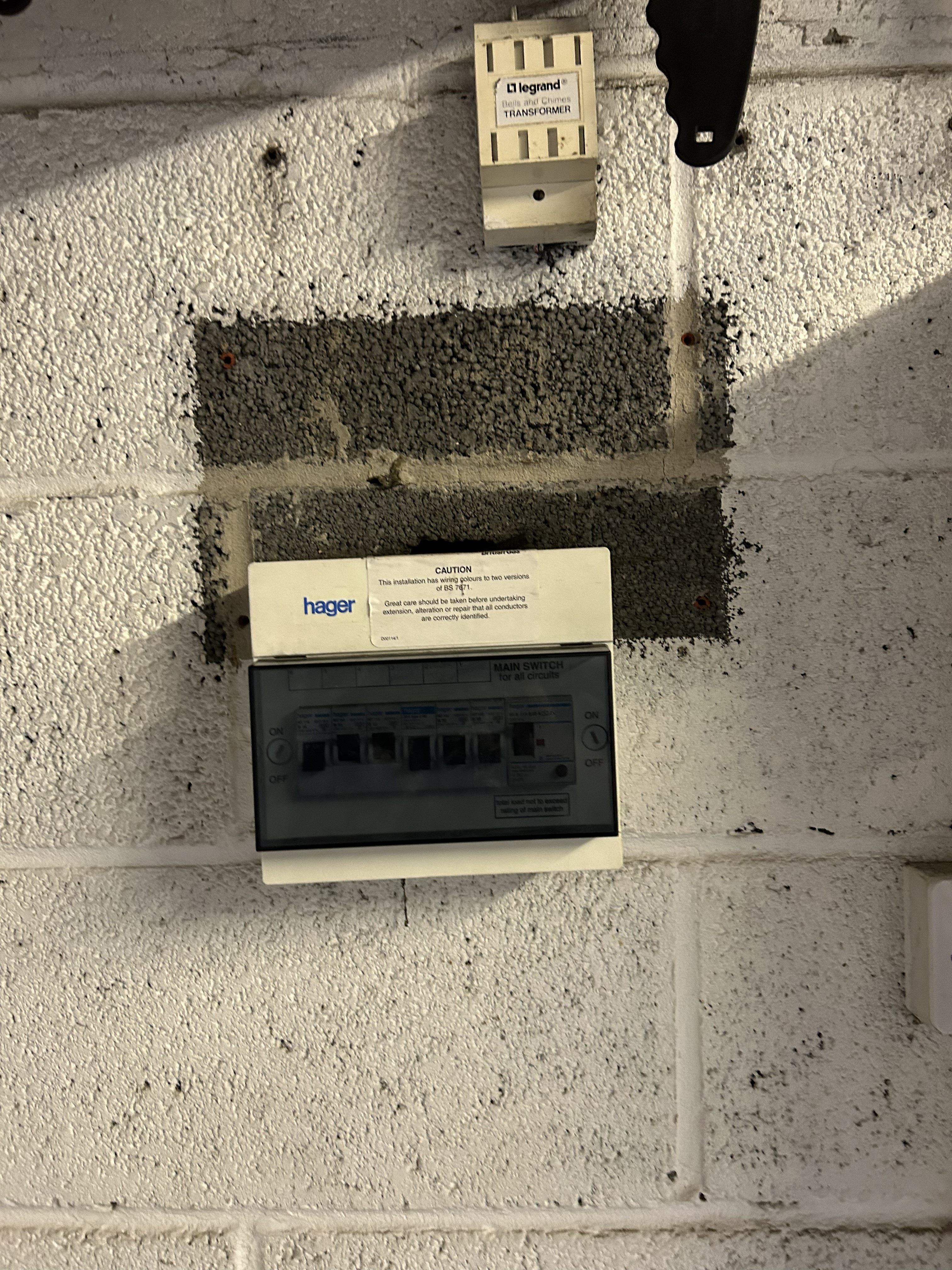
1. A plastic consumer unit — coded as C2 (potentially dangerous). Plastic boards were banned under the 18th Edition of BS 7671 due to fire risk. A plastic board installed under the stairs or near a means of escape is especially serious: if the board catches fire, it burns and spreads flame, potentially blocking the escape route. A metal board contains any fire within itself.
2. No RCD protection — also a C2 defect. Without an RCD, there is no protection against electrocution if a cable is damaged, water gets into an appliance, or a fault makes something unexpectedly live. Every home should have residual current protection on every circuit.
When Power Team Electrics is already replacing the consumer unit, a significant portion of the inspection work is carried out as part of that process. The standalone EICR that follows can be completed more efficiently, and we pass that saving on in the form of a reduced price.
If your property has an old or plastic consumer unit, upgrading it and combining that with an EICR is often the most cost-effective approach — and it directly resolves the two most common EICR failure points before the inspection is even complete.
What Should Be Included in Every EICR Price?
A genuine EICR quote should cover all of the following:
- Physical inspection of the installation — the consumer unit, accessible wiring, earthing and bonding arrangements, socket outlets, light fittings
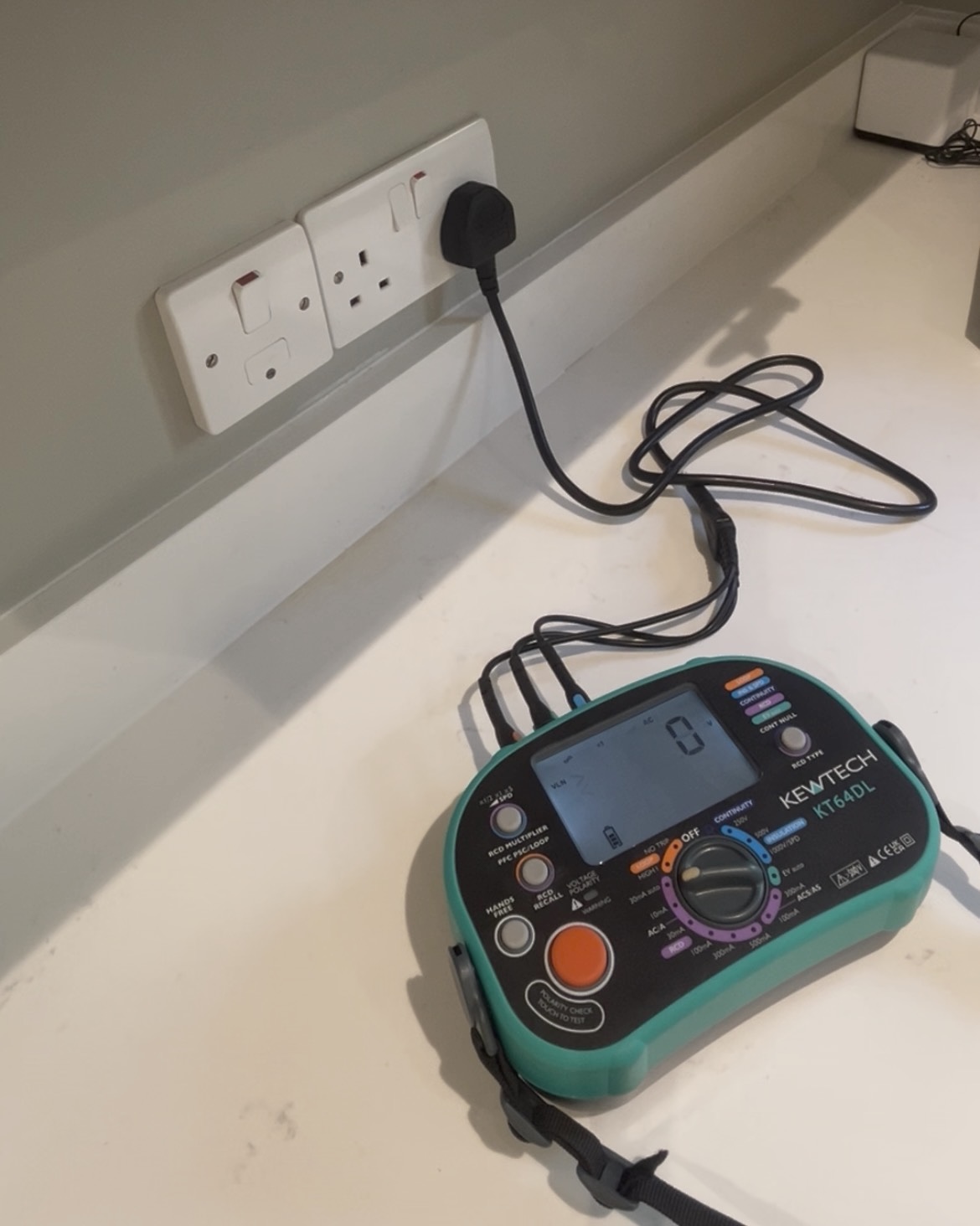
- Circuit-by-circuit testing — insulation resistance testing on every circuit, continuity of protective conductors, polarity verification, and RCD testing where applicable
- The formal written report — every circuit tested and coded according to BS 7671, with each defect described, categorised (C1, C2, or C3), and explained
- Any immediate safety actions taken on the day — if a C1 (danger present) defect is found, it must be made safe before the electrician leaves
- The EICR certificate itself
Why Do Prices Vary So Much Between Companies?
1. Some quotes are not for a full EICR — a visual check is not an EICR. If the electrician is not testing circuits individually, they are not carrying out a proper inspection.
2. Some companies absorb the cost as a loss-leader — quoting low for the inspection and relying on remedial work recommendations to make their margin.
3. Regional variation in labour rates — genuine variation in what electricians charge across the country.
When comparing quotes, check that every quote covers: a full physical inspection, circuit testing (ask specifically whether insulation resistance and earth continuity tests are included), and a formal coded report.
Landlords: What the Law Requires
Under the Electrical Safety Standards in the Private Rented Sector (England) Regulations 2020, landlords are legally required to:
- Have the electrical installation inspected by a qualified electrician
- Obtain an EICR at least every five years
- Provide a copy of the EICR to existing tenants within 28 days
- Provide a copy to prospective tenants before they occupy the property
- Carry out any remedial work identified within 28 days (or less if specified in the report)
A property with a plastic or rewireable consumer unit will almost certainly receive an Unsatisfactory result. The cost of non-compliance — fines of up to £30,000 — is considerably more than the cost of an EICR.
Book Your EICR with Power Team Electrics
Power Team Electrics provides thorough, properly conducted EICRs across the Home Counties. Every inspection is carried out by a Part P certified electrician and produces a full written report coded to BS 7671:2018 (18th Edition).
Visit: www.powerteamelectrics.co.uk