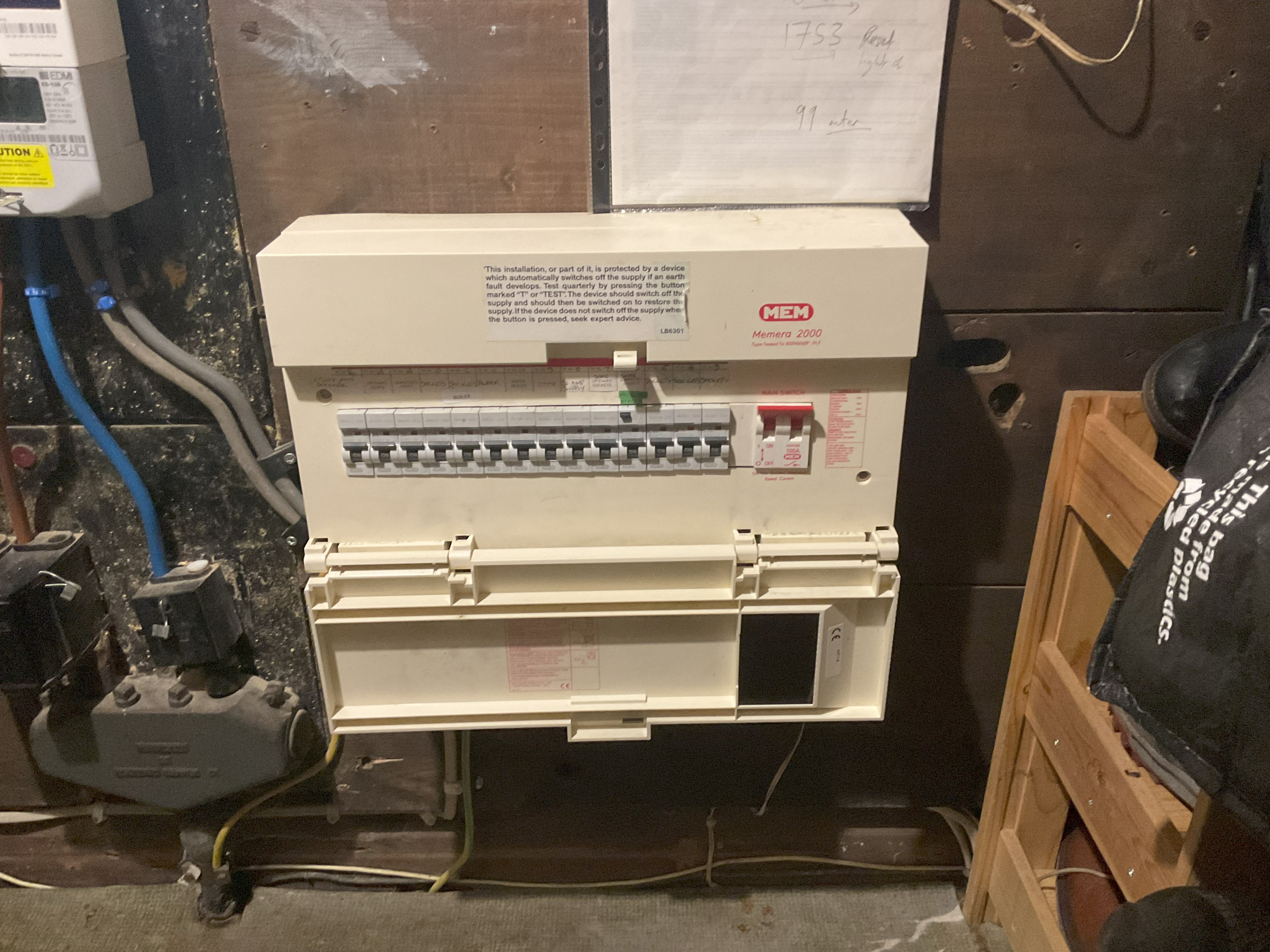
If you have a plastic fuse box in your home, there is something you need to know. A fuse board upgrade is not just an electrical improvement — for many UK households, it is a life-safety issue. Plastic consumer units present a fire risk that was not fully understood when they were first introduced, and modern wiring regulations now prohibit them for good reason.
A Brief History of Fuse Boards
The earliest consumer units used metal cases and fuse wire. When a fuse blew, the spark generated against the metal case could cause a violent fault current — potentially fracturing the service fuse, the DNO-owned sealed component between your meter and board that only the network operator is permitted to replace. To contain those sparks, manufacturers switched to plastic and Bakelite enclosures. Some older Bakelite boards may even contain asbestos in their construction.
When MCBs and RCBOs replaced fuse wire, the original reason for using plastic disappeared entirely. Yet plastic remained the industry standard for decades. The irony is complete: a material introduced to solve one problem had become a serious problem of its own.
Why Plastic Is Now the Problem
Plastic is flammable. Under fault conditions, a plastic consumer unit can catch fire and sustain combustion. In most UK homes, the consumer unit is fitted under the stairs — surrounded by enclosed timber on all sides. If the board ignites, the staircase burns with it.
In a two-storey property, the staircase is usually the only means of escape from the upper floor. If occupants are asleep upstairs and the staircase is on fire, they have no way out. The consequences are fatal.
18th Edition BS 7671 Regulation 421.1.201, which came into force in January 2019, requires consumer units in domestic premises to be housed in non-combustible enclosures. Metal only. Plastic is no longer compliant for any new installation or board replacement.
The Solution: Metal Consumer Unit with RCBOs
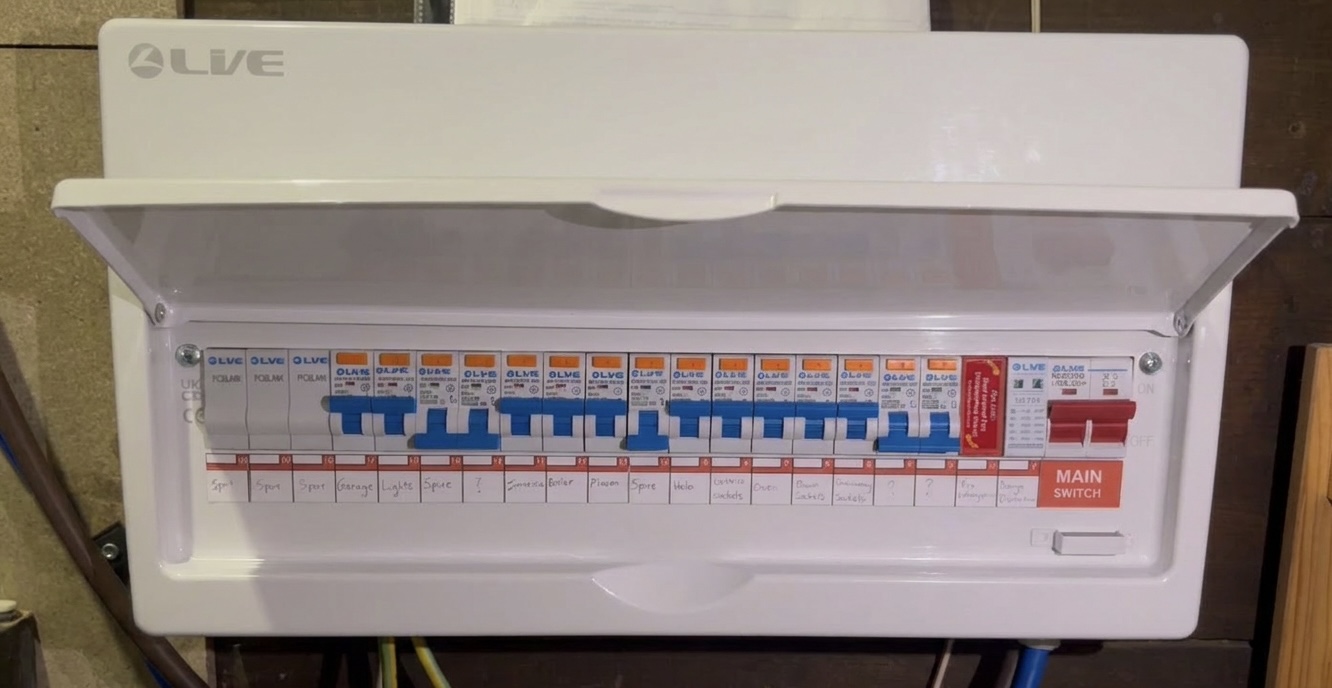
Metal does not burn. Any fault event, arc, or short circuit is contained entirely within the metal enclosure — it cannot spread to the surrounding structure. A full RCBO consumer unit goes further: every circuit gets its own individual RCBO (Residual Current Breaker with Overcurrent protection), combining RCD and MCB in a single device. A fault on one circuit trips only that circuit. The rest of the house stays live. Fault location is immediately obvious.
Premium Option: Built-In DIN Rail Fire Extinguisher
Power Team Electrics offers an 18th Edition RCBO metal consumer unit with a built-in DIN rail fire extinguisher mounted inside the unit itself. The extinguisher activates automatically in the event of a significant heat event — before a fire can spread beyond the enclosure. This is particularly recommended for boards installed under the stairs or in any confined space where a fire could develop quickly and block an escape route before it is detected.
Signs You Need a Fuse Board Upgrade
- You have a plastic or Bakelite consumer unit
- Your board uses fuse wire rather than circuit breakers (MCBs or RCBOs)
- There are no RCDs (residual current devices) — no devices with a TEST button
- The board is located under the stairs
- A previous EICR flagged the board as a hazard
- Your home is over 25 years old and the board has never been upgraded
Landlords: The Electrical Safety Standards in the Private Rented Sector (England) Regulations 2020 require a valid EICR on all rental properties, renewed at least every five years. A plastic board will almost certainly be flagged as a C2 or C3 code — a legal obligation to remediate. Failure to act creates serious liability.
What an Upgrade Involves
A fuse board upgrade from Power Team Electrics involves full isolation of the existing board, removal of the old unit, installation of a new 18th Edition compliant metal consumer unit with RCBOs on every circuit and a Surge Protection Device (SPD) fitted as standard. The work is certified under Part P with a full Electrical Installation Certificate issued to the customer. All documentation is provided on the day.
Coverage
Power Team Electrics carries out fuse board upgrades across the Home Counties: Surrey (Guildford), Kent (Maidstone), Essex (Chelmsford), Hertfordshire (St Albans), Berkshire (Reading), Buckinghamshire (Milton Keynes), and Sussex (Brighton). All notifiable works fully certified. 18th Edition compliant.