If you are planning a home EV charger installation, one of the first decisions you will face is whether to go tethered or untethered. Both types deliver the same result — a full battery by morning — but they work differently, look different, and suit different households. Getting this choice right before installation saves you from unnecessary costs or inconvenience down the line.
At Power Team Electrics, we install EV chargers across Surrey, Kent, Essex, Hertfordshire, Berkshire, Buckinghamshire, and Sussex. We speak to homeowners about this exact question every week, so we have put together this guide to help you make the right call.
What Is a Tethered EV Charger?
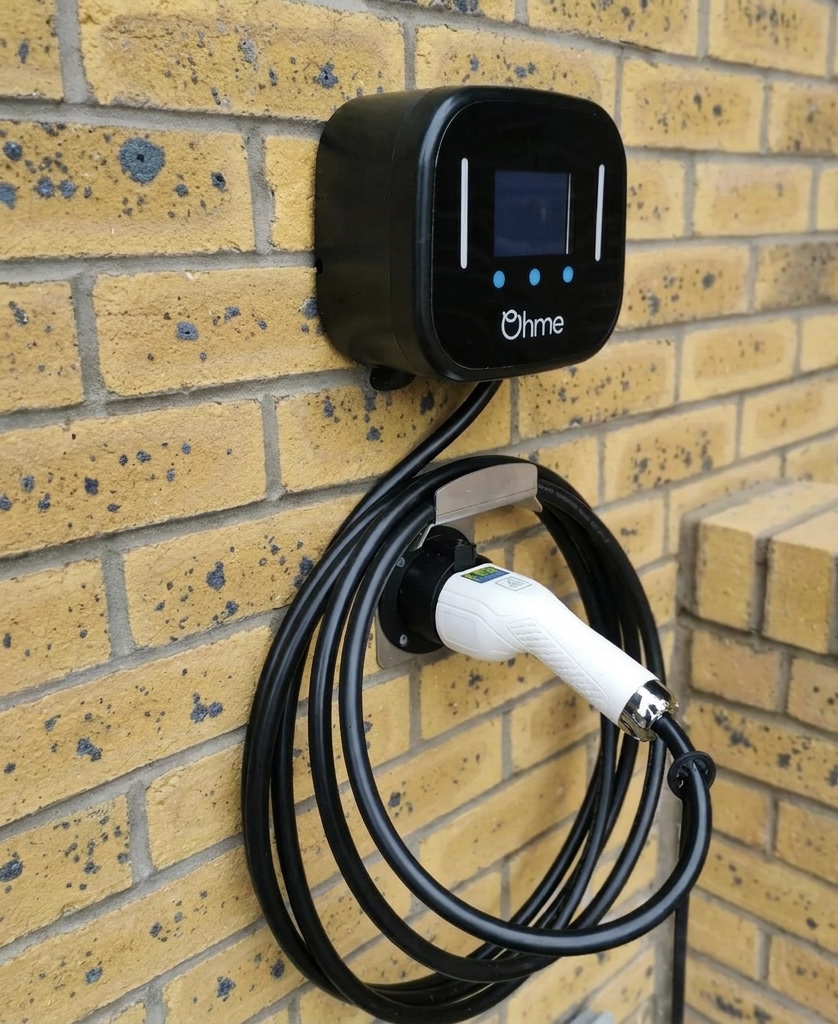
A tethered EV charger has a cable permanently attached to the unit. You pull the cable out, plug it into your car, and charge. There is no separate cable to worry about.
The cable is typically a Type 2 connector, which is the universal standard across almost all electric vehicles sold in the UK since 2022. Tethered chargers are available with cables of varying lengths — for example, the BG Sync comes with a 7.5-metre cable, while the Hypervolt is available in 5m, 7.5m, and 10m options depending on your parking setup.
What Is an Untethered (Socketed) EV Charger?
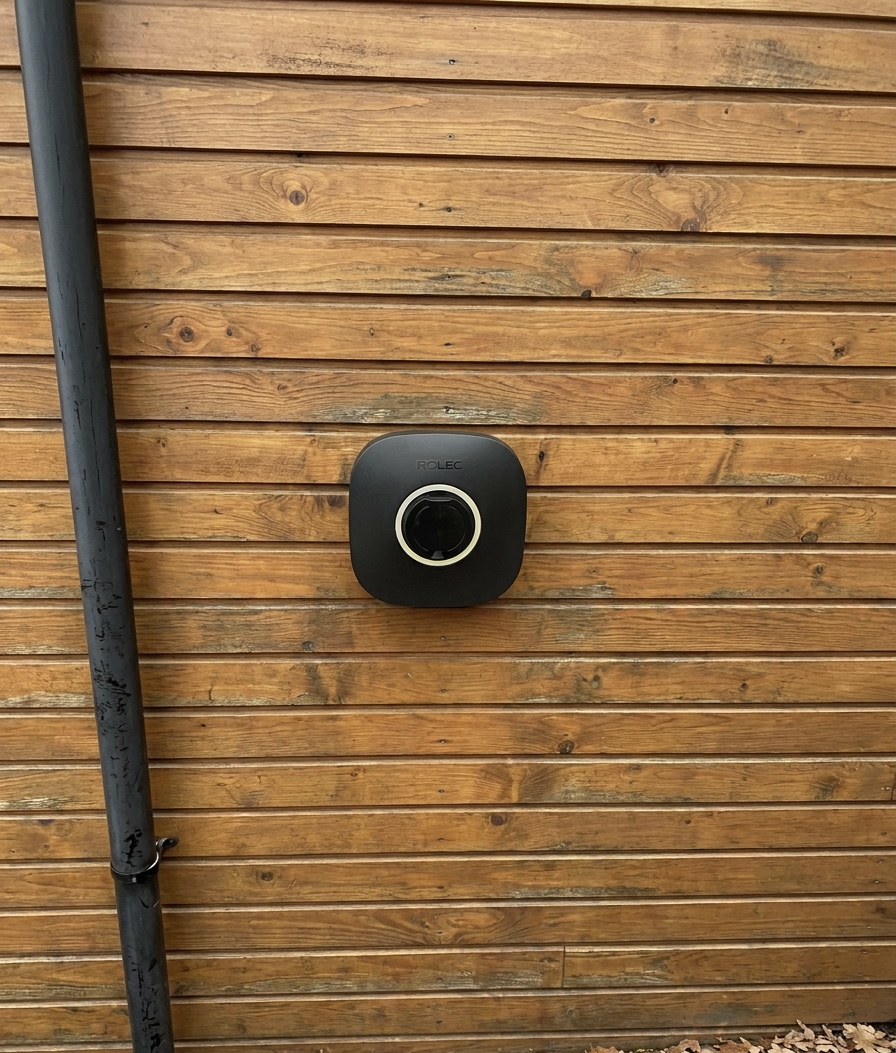
An untethered charger — also called a socketed charger — has no cable attached. Instead, it has a Type 2 socket built into the unit. You plug one end of your own cable into the charger and the other end into your car.
Examples from our range include the Rolec Evo, the EasyOne (cable supplied separately), and the myenergi Zappi — a smart charger popular with solar panel owners. When not charging, the cable is stored in your car or in the garage, keeping the unit itself neat and compact.
The Sync Energy Link deserves a specific mention here: it is one of the smallest untethered chargers currently available on the market, making it an excellent option for properties where space or aesthetics are a priority.
The Key Difference at a Glance
| Feature | Tethered | Untethered (Socketed) |
|---|---|---|
| Cable attached to unit | Yes — permanently | No — you supply your own |
| Convenience | High — cable always ready | Slightly lower — need to retrieve cable |
| Future-proofing | Lower — tied to cable type | Higher — works with any Type 2 car |
| Appearance | Bulkier with cable present | Tidier, more compact |
| Cable security | Cable cannot be easily stolen | Your cable could be removed |
| Best for | Single-car households, daily drivers | Multi-car households, those who may change EV brand |
Tethered EV Charger: Pros and Cons
Pros
Convenience above all else. A tethered charger is the most friction-free option. You arrive home, pull the cable out, plug it in. There is nothing to retrieve, uncoil, or carry. For households that charge every evening without thinking about it — which is most EV owners — this simplicity is genuinely valuable.
Cable is always there. You cannot forget a tethered cable at a service station or leave it at a friend's house. It lives on the charger, ready to go, 24 hours a day.
Harder to steal. The cable is locked into the unit and cannot simply be unplugged at the charger end.
Cons
You are committed to one cable type. If you switch to an electric vehicle that requires a different connector, your tethered cable will not be compatible. Most home chargers use AC Type 2, which is the standard for everyday home charging across virtually every EV on the UK market.
Cable degrades over time. Because it is permanently attached and in regular use, the cable on a tethered unit is subject to wear. A socketed charger allows you to replace the cable independently; with a tethered unit, cable degradation may eventually mean replacing the entire charger.
Appearance. With a cable always hanging from the front, tethered units have a more industrial look.
Untethered EV Charger: Pros and Cons
Pros
Future-proof. Because the cable is separate from the unit, an untethered charger will work with any car that accepts a Type 2 plug — now and in the future. If you change vehicle, upgrade to a different brand, or have multiple cars in the household, you are not limited by the cable built into the wall unit.
Tidier appearance. Without a cable permanently attached, an untethered charger sits flush against the wall with a clean, compact look. Units like the Sync Energy Link — the smallest on the market — are barely noticeable from the street.
Cable flexibility. A separate cable can be replaced, upgraded, or swapped at will. If you want a longer cable for a different parking position, you buy a different cable — you do not replace the unit.
Cons
You must own and carry a cable. Type 2 cables are not included with every EV, and not every household has one to hand from day one.
Slightly less convenient. Retrieving the cable, plugging both ends, and storing it again after charging adds a small amount of effort to your daily routine.
Type 2: The UK Standard
Since January 2022, Type 2 has been the universal connector standard for home and public AC charging in the UK. Every new EV sold in Britain — regardless of manufacturer — uses a Type 2 socket for home charging.
Which Type of Household Suits Each Charger?
Choose a Tethered Charger if:
- You have one car and are not planning to change manufacturer in the near term
- Maximum convenience is the priority
- You want a charger that is immediately intuitive for all members of the household
- Cable theft or cable loss is a concern
- You charge in an open driveway where you want the cable accessible at all times
Choose an Untethered Charger if:
- You have two or more EVs that may use different vehicles over time
- You are thinking about changing car in the next few years
- Appearance matters — you want a compact, wall-mounted unit that does not dominate the facade of your property
- You own a myenergi Zappi and want to integrate your charger with solar generation
- You are a landlord installing a charger for a rental property where future tenants may drive any make of EV
Our EV Charger Range
Tethered options:
- BG Sync — 7.5m tethered cable; reliable, clean design; an excellent everyday choice for most households
- Hypervolt — available in 5m, 7.5m, or 10m cable lengths; smart connectivity and a premium finish
Untethered (socketed) options:
- Rolec Evo — robust, weatherproof, and well-established in the UK market
- EasyOne — socketed charger; cable available separately; strong value for straightforward installations
- myenergi Zappi — smart charger designed to work with solar panels and home energy systems
- Sync Energy Link — the smallest socketed unit on the market; the choice for aesthetics-first installations
Every charger we install is completed by our Part P certified, 18th Edition compliant engineers, with a full electrical certificate issued upon completion.
A Note on Installation Requirements
Whichever type you choose, your home installation will need to meet certain requirements:
- A suitable dedicated circuit run from the consumer unit to the charger location
- Correct IP rating for outdoor installation if the charger is exposed to weather
- Compliance with BS 7671:2018 (18th Edition) wiring regulations
- If your consumer unit is older, we will advise on whether an upgrade is required
Power Team Electrics handles the full scope of work: from the initial assessment of your consumer unit through to the finished installation and electrical certificate. Contact us at powerteamelectrics.co.uk to get a quote or book a survey in Surrey, Kent, Essex, Hertfordshire, Berkshire, Buckinghamshire, or Sussex.